


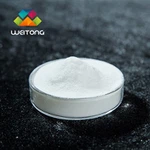
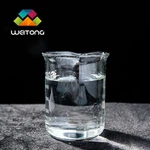


Povidone Iodine25655-41-8
Hangzhou Weitong Nanomaterials Co., Ltd. is an innovative enterprise focusing on the field of nanomaterials, founded in 2015. Our factory has an efficient production capacity and is able to produce a wide range of high-quality products. Our factory adopts a strict quality management system to ensure that the products meet high quality standards. We have a professional technical team and advanced production equipment, as well as perfect after-sales service, to provide customers with a full range of solutions. We strive for continuous innovation and optimization to meet and exceed our customers' needs and expectations, and move forward to become a world-class chemical company.
Why Choose US
Our factory:Hangzhou Weitong Nanomaterials Co., Ltd. is an innovative enterprise focusing on the field of nanomaterials, founded in 2015. Our factory has an efficient production capacity and is able to produce a wide range of high-quality products.
Our product:Our range of NVP-based products covers various series tailored to different industries. This includes the homopolymer series (K15-K120), copolymer series (VA64 powder, V64E, VA64W, 73W, 37E, 37W), and cross-linked series (PVPP XL-10, PVPP-10, povidone-iodine pvpI). These products find applications across diverse sectors, serving as stabilizers, dispersants, coatings, inks, and adhesives.
Quality control:We have the ISO9001 certificate, and we strictly follow GMP production standards for production.
Good after-sale service:We have a sound after-sales service system, so whatever you have any doubt about the product, you can strictly contact us, we will give you a satisfied plan.

Product name : PVP-K90 Povidone K90 Chemical Name:1-vinyl-2-pyrrolidone homopolymer CTFA name: POLYVINYLPYRROLIDONE CAS No.:9003-39-8 Molecular formula :(C6H9NO

PVP-I is a complex of PVP and iodine, which has a strong killing effect on bacteria, viruses, fungi, molds and spores, and is stable, non-irritating and completely water-soluble.
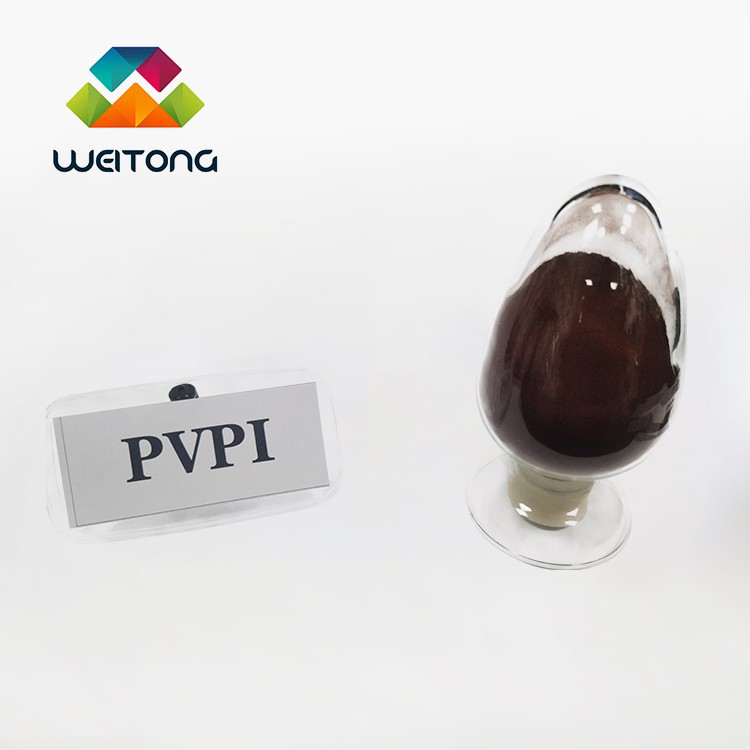
PVP i (Vinylpyrrolidone iodine) is a broad-spectrum, high-efficiency, low-toxicity, and safe disinfectant. It has a good killing effect on bacteria, fungi, viruses, protozoa, etc. It can not only be used for surgical disinfection, but also It can also be used to treat burns and scalds, skin ulcers, gynecological diseases, and prevent and assist in the treatment of venereal diseases, etc.

Povidone Iodine Solution Chemicals
Povidone-iodine (pvp-i) is a loose complex formed by the combination of elemental iodine and a polymer carrier. Povidone iodine acts as a carrier and solubilizing agent. It is yellow-brown to brown-red amorphous powder at room temperature.

Povidone Iodine PVP I Chemicals
The solution is what is called iodophor in mainland China. It can be used to disinfect the skin of patients and the hands of medical staff, for minor wounds, and can be applied to the skin in the form of liquid or powder. Side effects include skin irritation.

Povidone Iodine Powder Chemicals
Povidone iodine powder is a medical-grade antiseptic agent that contains iodine and povidone. It can be used to disinfect skin and wounds, and prevent infections. The powder formula allows for easy and accurate dosing, making it a popular choice in healthcare settings.

Povidone Iodine Betadine Chemicals
Povidone-iodine powder also known as Betadine (English: Excellent-iodine) is an antiseptic used for skin disinfection before and after surgery. The solution is what is called iodophor in mainland China. It can be used to disinfect the skin of patients and the hands of medical staff, for minor wounds, and can be applied to the skin in the form of liquid or powder.

Povidone-iodine Betadine is a well-known antiseptic solution that contains a mixture of povidone and iodine. It is used for wound cleansing, skin preparation before surgery, and for the management of various skin conditions.

Povidone-iodine betadine is yellow-brown to red-brown amorphous powder, soluble in water or ethanol, insoluble in ether or chloroform.
What is Povidone Iodine
Povidone-iodine (PVP-I), also known as iodopovidone, is an antiseptic used for skin disinfection before and after surgery. It may be used both to disinfect the hands of healthcare providers and the skin of the person they are caring for.It may also be used for minor wounds. It may be applied to the skin as a liquid or a powder. Povidone-iodine betadine is yellow-brown to red-brown amorphous powder, soluble in water or ethanol, insoluble in ether or chloroform.
Advantages of Povidone Iodine
Povidone iodine is an effective antiseptic that does not impede wound healing.
Povidone iodine is bactericidal against Gram-positive and -negative organisms.
Povidone iodine aids healing in a range of acute and chronic wounds.
Pharmacopoeia Standards
Main active ingredients
Complex of 1-vinyl-2-pyrrolidone homopolymer and iodine. Calculated as dry product, the content of available iodine (I) should be 9.0% to 12.0%.
Traits
Yellow-brown to red-brown amorphous powder. It is soluble in water or ethanol, but insoluble in ether or chloroform.
Identify
Take about 0.5g of this product, add 5ml of water to dissolve, and test according to the following method.
(1) Take 1 drop of the solution, add 9ml of water and 1ml of starch indicator solution, it will appear dark blue.
(2) Take 0.5ml of the solution, spread it on a glass plate with an area of about 7.5cm×2.6cm, and place it overnight at low humidity and room temperature to dry, forming a brown, dry film that is easily soluble in water.


The main indications for povidone-iodine are as follows:
1. Used for purulent dermatitis, skin fungal infection, small area mild burns and scalds, and also used for disinfection of small area skin and mucous membrane wounds.
2. Bacterial and fungal vaginitis, cervical erosion, trichomonal vaginitis, vaginal itching, vaginal infection with odor, yellow leucorrhea, comprehensive vaginal inflammation, senile vaginitis, herpes, gonorrhea, syphilis and genital warts Prophylactic and topical therapeutic disinfection.
3. Disinfection of balanitis, posthitis, external genitalia and surrounding areas. Prevention and topical treatment and disinfection of gonorrhea, syphilis, and genital warts.
4. Disinfection of tableware and tableware.
5. Disinfect the skin at the surgical site.
1. Disinfection of thermometer: Soak in 3% concentration for more than 30 minutes. After taking it out, it can be placed in 75% ethanol for later use. It can also be rinsed with sterile water or cold boiled water and placed in a sterilized container for later use.
2. Disinfection of various glassware: It can be soaked at a concentration of 2% to 3% for 1 to 2 hours. It has a washing effect and is easy to clean. It is corrosive to carbon steel items such as surgical blades and aluminum products. Other metal instruments should not be soaked and sterilized for a long time.
3. Skin disinfection: 1% to 3% for 2 minutes, which can be used to disinfect hands before surgery or for medical staff in infectious diseases wards and infectious disease specialist outpatient clinics.
4. Treatment of scalds and burns: Use 0.5% solution and spray it on the wound once every 12 hours until the eschar is separated.
5. Daily health care: Used for the treatment of bacterial, fungal, trichomonal vaginitis, cervicitis and cervical erosion. Used to prevent sexually transmitted diseases (STD), such as gonorrhea, syphilis, AIDS, etc. Clean the vagina before and after sex and after menstruation. Disinfection of gynecological surgery and vaginal disinfection before delivery.
Adverse reactions
In rare cases, there may be slight temporary local irritation to the wound mucosa when applying the medication, which will disappear on its own after a while, without the need for special treatment.
Taboo
Not suitable for pregnant and lactating women.
Structure of Povidone Iodine
Povidone-iodine is a chemical complex of the polymer povidone (polyvinylpyrrolidone, PVP) and triiodide (I−3).It is synthesized by mixing the PVP polymer with iodine (I2), allowing the two to react.
It is soluble in cold and mild-warm water, ethyl alcohol, isopropyl alcohol, polyethylene glycol, and glycerol. Its stability in solution is much greater than that of tincture of iodine or Lugol's solution.
Free iodine, slowly liberated from the povidone-iodine (PVP-I) complex in solution, kills cells through iodination of lipids and oxidation of cytoplasmic and membrane compounds. This agent exhibits a broad range of microbiocidal activity against bacteria, fungi, protozoa, and viruses. Slow release of iodine from the PVP-I complex in solution minimizes iodine toxicity towards mammalian cells.
PVP-I can be loaded into hydrogels, which can be based on carboxymethyl cellulose (CMC), poly(vinyl alcohol) (PVA), and gelatin, or on crosslinked polyacrylamide. These hydrogels can be used for wound dressing. The rate of release of the iodine in the PVP-I is heavily dependent on the hydrogel composition: it increases with more CMC/PVA and decreases with more gelatin.
Pharmacodynamics of Povidone Iodine
Povidone iodine is a kind of iodine disinfectant which directly cause in vivo protein denaturation, precipitation of bacteria, and further resulting in the death of pathogenic microorganisms. Therefore, it is effective in disinfection and sterilization. It can kill viruses, bacteria, spores, fungi, and protozoa with low toxicity to human. Povidone-iodine aqueous solution has strong pharmacological activity against Staphylococcus aureus, Neisseria gonorrhoeae, Pseudomonas aeruginosa, syphilis, hepatitis B virus, HIV, and Trichomonas vaginalis. Povidone iodine gel is a gynecological topical semi-mobile colloidal agent made by povidone iodine and hydrophilic matrix. It is a system for maintaining its sustained release. Owing to the continuous release of free iodine, it can enable the skin and mucous membranes to maintain a certain effective concentration of iodine for killing bacteria. It is mainly used for gynecological vaginal infection. It exerted its effect through being miscible with vaginal secretions and further killing the inside pathogenic microorganisms, and thus blocking the spread of sexually transmitted diseases and invasion, as well as treating other infected vaginal diseases caused by other kinds of bacteria.
Povidone-iodine solution have demonstrated more rapid kill (seconds to minutes) of S. aureus and M. chelonae at a 1:100 dilution than did the stock solution. The virucidal activity of 75–150 ppm available iodine was demonstrated against seven viruses. Other investigators have questioned the efficacy of iodophors against poliovirus in the presence of organic matter and rotavirus in distilled or tapwater. Manufacturers' data demonstrate that commercial iodophors are not sporicidal, but they are tuberculocidal, fungicidal, virucidal, and bactericidal at their recommended use-dilution.
Mechanism of Action
Povidone-iodine is called iodophore which means povidone acts as a carrier of iodine. Iodine is considered as the active moiety that mediates microbicidal actions. When released from the complex, free iodine (I2) penetrates the cell wall of microorganisms quickly, and the lethal effects are believed to result from disruption of protein and nucleic acid structure and synthesis. While the full mechanism of action is not fully elucidated, iodine is thought to inhibit vital bacterial cellular mechanisms and structures, and oxidizes nucleotides fatty or amino acids in bacterial cell membranes 1. Additionally, free iodine disrupts the function of the cytosolic enzymes involved in the respiratory chain, causing them to become denatured and deactivated 1. In vitro evidence suggests that iodine also counteracts inflammation elicited by both pathogens and the host response via multifactorial effects. In hosts, povidone-iodine was demonstrated to modulate the redox potential, inhibit the release of inflammatory mediators such as TNF-α and β-galactosidase, inhibit metalloproteinase production, and potentiate the healing signals from pro-inflammatory cytokines by activation of monocytes.
Povidone-iodine Drug Analysis



Method name
Povidone iodine - determination of povidone iodine - potentiometric titration method
Application scope
This method uses potentiometric titration to determine the iodine (I) content in povidone-iodine.
This method is suitable for the determination of iodine (I) content in povidone-iodine.
Method principle
Add water and stir to dissolve the test sample. According to the potentiometric titration method (Appendix VII A), titrate with sodium thiosulfate titrant (0.1mol/L). Each 1mL of sodium thiosulfate titrant (0.1mol/L) is equivalent to 12.69 mg of I.
Reagents
1. Water (freshly boiled and brought to room temperature)
2. Sodium thiosulfate titrant (0.1mol/L)
3. Anhydrous sodium carbonate
4. Potassium iodide
5. Benchmark potassium dichromate
6. Starch indicator liquid
7. Dilute sulfuric acid
Sample preparation
1. Sodium thiosulfate titrant (0.1mol/L)
Preparation: Take 26g of sodium thiosulfate and 0.20g of anhydrous sodium carbonate, add an appropriate amount of newly boiled cold water to dissolve into 1000mL, shake well, let it sit for 1 month and then filter.
Calibration: Take 0.15g of the standard potassium dichromate dried to constant weight at 120°C, weigh it accurately, put it in an iodine bottle, add 50mL of water to dissolve, add 2.0g of potassium iodide, shake gently to dissolve, add 40mL of dilute sulfuric acid, Shake well, stopper tightly, place in dark place for 10 minutes, add 250mL of water to dilute, titrate with this solution to near end point, add 3mL of starch indicator solution, continue titration until blue disappears and becomes bright green, and use blank test for titration results Correction. Each 1mL of sodium thiosulfate titrant (0.1mol/L) is equivalent to 4.903mg of potassium dichromate. Calculate the concentration of this solution based on the consumption of this solution and the amount of potassium dichromate taken.
When the room temperature is above 25°C, the reaction solution and dilution water should be cooled to about 20°C.
2. Starch indicator liquid
Take 0.5g of soluble starch, add 5mL of water and stir evenly, then slowly pour it into 100mL of boiling water, stir as you add, continue to boil for 2 minutes, let it cool, pour out the supernatant liquid, and you have it. This liquid should be prepared fresh before use.
3. Dilute sulfuric acid
Take 57mL of sulfuric acid and dilute it with water to 1000mL.
Operation steps: Take about 1g of this product, weigh it accurately, put it in a beaker, add 120mL of water, stir to dissolve, and titrate with sodium thiosulfate titrant (0.1mol/L) according to the potentiometric titration method (Appendix VII A). 1mL of sodium thiosulfate titrant (0.1mol/L) is equivalent to 12.69mg of I.
Note 1: "Precision weighing" means that the weighing should be accurate to one thousandth of the weighed weight, and "precision measuring" means that the accuracy of measuring the volume should comply with the national standards for pipettes of that volume. Accuracy requirements.
Note 2: "Moisture determination" uses the drying method. Take 2~5g of the test sample and spread it flatly in a flat weighing bottle that has been dried to constant weight. The thickness should not exceed 5mm. The loose test sample should not exceed 10mm. Weigh it accurately. Open the bottle cap and dry it at 100~105℃ for 5 hours. Cover the bottle cap, transfer it to a dryer, cool it for 30 minutes, weigh it accurately, dry it at the above temperature for 1 hour, cool it, and weigh it twice in a row. The difference in weighing does not exceed 5mg. Based on the weight loss, calculate the moisture content (%) in the test sample.
Main active ingredients
Complex of 1-vinyl-2-pyrrolidone homopolymer and iodine. Calculated on a dry basis, the available iodine (I) content should be 9.0% to 12.0%.
Traits
Yellow-brown to red-brown amorphous powder. Soluble in water or ethanol, insoluble in ether or chloroform.
Identify
Take about 0.5g of this product, add 5mL of water to dissolve, and then test according to the following method.
(1) Take 1 drop of the solution, add 9 ml of water and 1 ml of starch indicator solution, and it will appear dark blue.
(2) Take 0.5 mL of the solution, apply it on a glass plate with an area of approximately 7.5 cm × 2.6 cm, and place it at room temperature with low humidity overnight to dry to form a brown, dry film that is easily soluble in water.
examine
Loss on drying
Take about 5g of this product, weigh it accurately, dry it at 105°C for 4 hours, weigh it, and weigh it after continuing to dry for 1 hour each time until the weight difference after two consecutive dryings does not exceed 5.0mg; lose weight Must not exceed 8.0%.
Residue on ignition
Take 1.0g of this product and check it in accordance with the law. The remaining residue should not exceed 0.1%.
Heavy metal
Take the residue left under the ignition residue category and inspect it in accordance with the law. The heavy metal content must not exceed 20 parts per million.
Arsenic salt
Take 1.3g of this product, add 0.5g of calcium hydroxide, mix well, add an appropriate amount of water (about 2mL), stir evenly, after drying, first burn it with a small fire to carbonize, then burn it at 600℃ to completely ashes, and let it cool. , add 5mL of hydrochloric acid and 23mL of water, check according to law, and it should comply with regulations (0.00015%).
Nitrogen content
Take about 0.50g of this product, weigh it accurately, and measure it according to the nitrogen determination method. Calculated on a dry basis, the nitrogen content should be 9.5% to 11.5%.
Iodide ion
Take about 0.50g of this product, weigh it accurately, place it in a 250mL Erlenmeyer flask, add 100mL of water to dissolve, add a few drops of sodium bisulfite test solution to make the color of the solution disappear, add 10mL of nitric acid, and accurately add silver nitrate titrant (0.1 mol/L) 25mL, shake well, add 0.5mL of ferric ammonium sulfate indicator solution, titrate with ammonium thiocyanate titrant (0.1mol/L) until the solution shows light brick red, and correct the titration result with a blank test. Each 1mL of silver nitrate titrant (0.1mol/L) is equivalent to 12.69mg of I. Calculate the percentage of total iodine minus the percentage of available iodine under the content determination item to obtain the percentage of iodide ions. Calculated as dry product, the iodide ion content shall not exceed 6.6%.
Content determination
Take about 1g of this product, weigh it accurately, put it in a beaker, add 120mL of water, stir to dissolve, and titrate with sodium thiosulfate titrant (0.1mol/L) according to the potentiometric titration method (2010 edition of the Pharmacopoeia, Appendix VII A) , each 1mL of sodium thiosulfate titrant (0.1mol/L) is equivalent to 12.69mg of I.
Povidone Iodine Preparation Method
The preparation method of povidone iodine: Be that 1.17% potassium iodide is dissolved in part water in 10% water by mass percent, 2.34% iodine is added to wherein stirring and dissolving, be mixed with iodine solution standby; 0.01% stability auxiliary agent is dissolved in part water 10% water standby; In complex reaction still, add remaining water, open and stir, dropping into 10.0% polyvinylpyrrolidone k30 dissolves, then substep adds above-mentioned two kinds of solution that prepare, finally add 7.5% solvent normal propyl alcohol, after feeding intake, allow reactant mixture at 20 ℃, react 2 hours, react complete mixture is lowered the temperature and obtained betagen solution.
FAQ
Hot Tags: Povidone Iodine25655-41-8, China Povidone Iodine25655-41-8 manufacturers, suppliers, factory, Povidone Iodine Usp Chemicals, Povidone Iodine Heb, Polyvinylpyrrolidone Iodine Chemicals, Povidone Powder Chemicals, Povidone Iodine Solution Chemicals, Povidone Xl
Previous
No InformationYou Might Also Like


Send Inquiry