



Excipients
Hangzhou Weitong Nanomaterials Co., Ltd. is an innovative enterprise focusing on the field of nanomaterials, founded in 2015. Our factory has an efficient production capacity and is able to produce a wide range of high-quality products. Our factory adopts a strict quality management system to ensure that the products meet high quality standards. We have a professional technical team and advanced production equipment, as well as perfect after-sales service, to provide customers with a full range of solutions. We strive for continuous innovation and optimization to meet and exceed our customers' needs and expectations, and move forward to become a world-class chemical company.



Why Choose US
Our factory:Hangzhou Weitong Nanomaterials Co., Ltd. is an innovative enterprise focusing on the field of nanomaterials, founded in 2015. Our factory has an efficient production capacity and is able to produce a wide range of high-quality products.
Our product:Our range of NVP-based products covers various series tailored to different industries. This includes the homopolymer series (K15-K120), copolymer series (VA64 powder, V64E, VA64W, 73W, 37E, 37W), and cross-linked series (PVPP XL-10, PVPP-10, povidone-iodine pvpI). These products find applications across diverse sectors, serving as stabilizers, dispersants, coatings, inks, and adhesives.
Quality control:We have the ISO9001 certificate, and we strictly follow GMP production standards for production.
Good after-sale service:We have a sound after-sales service system, so whatever you have any doubt about the product, you can strictly contact us, we will give you a satisfied plan.
What is Copovidone
Copovidone, an analog of povidone, is used as a tablet binder, a film-former, and as part of the matrix material used in controlled-release formulations. In tableting, copovidone can be used as a binder for direct compression and as a binder in wet granulation. Copovidone is often added to coating solutions as a film-forming agent. It provides good adhesion, elasticity, and hardness, and can be used as a moisture barrier.
Advantages of Copovidone
Water-soluble, K-value of 27-33
Monographed in all major pharmacopoeia. Listed in the FDA IIG database
Compatible with a broad number of APIs
Higher plasticity and lower hygroscopicity than povidone
Does not swell upon gelation, helping accelerate tablet disintegratio.

Copovidone and crospovidone are commonly used excipients in solid oral dosage forms for many decades. Typically, copovidone is used as dry binder and crospovidone as disintegrant in tableting formulations. The use of dry binder and disintegrant needs to be balanced to assure both strong but quickly disintegrating tablets.
The influence of different copovidone and crospovidone grades on the tablet's tensile strength and the ejected solid fraction (or relative density) at different compression pressures were evaluated systematically.
Compactability plots (tensile strength as a function of the compression pressure), compressibility plots (ejected solid fraction as a function of the compression pressure) and bondability plots (tensile strength as a function of the ejected solid fraction) were generated to visualize the influence of the individual excipient on the tableting characteristics.
Contour plots were generated to illustrate the influence of each excipient on the tensile strength and disintegration time of the resulting tablets at different compression pressures. Potential interactions and synergies respectively between the different grades of the tested excipients were illustrated.
Chemical Structure & Identifiers
|
Chemical Name |
Acetic acid ethenyl ester, polymer with 1-etheny1-2 pyrrolidinone |
|
CAS Registry Number |
[25086-89-9] |
|
Empirical Formula |
(C6H9NO)n (C4H6O2)m (111.1)n + (86.1)m The ratio of n to m is approximately n = 1.2m |
|
Molecular Weight |
Molecular weights of 45,000-70,000 have been determined for Koliidon VA 64. The average molecular weight of Copovidone is usually expressed as a K-value. The K-value of Kollidon VA 64 is nominally 28, with a range of 25.2-30.8. The K-value of Plasdone® S 630 is specified between 25.4 and 34.2. K-values are calculated from the kinematic viscosity of a 1% aqueous. Molecular weight can be calculated with the formula M = 22.22 (K + 0.075K2)1.65 The Ph.Eur and USP-NF describe Copovidone as a copolymer of 1-ethenylpyrrolidin-2-one and ethenyl acetate in the ratio (by mass) of 3:2 |
|
EINECS Number |
607-540-1 |
|
FDA UNII Code |
D9C330MD8B |
Physicochemical Properties
|
Physical form |
Solid, powder |
|
Appearance |
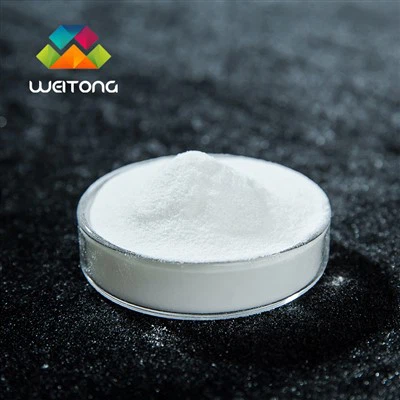
White, cream to yellowish finely divided powder |
|
PH value |
3.0-7.0 |
|
PKa |
-1.4 (Computed) |
|
Log P |
-1.1 |
|
Bulk density |
Standard grades: 0.20-0.30 g/ml Fine grades: 0.08-0.15 g/ml |
|
Tapped density |
Standard grades: 0.30-0.45 g/ml |
|
Density (true) |
1.1 g/ml |
|
Flashpoint |
215 0C |
|
Flowability |
Poorly flowing to relatively free-flowing powder |
|
Glass transition temperature |
100 – 110 0C |
|
Hygroscopicity |
Absorbs <10% weight at 50% RH |
|
K-value -630 |
Dependent on the supplier/grade. For Plasdone®, K value = 25 – 35 |
|
Melting point |
140 0C |
|
Solubility |
Soluble in water (179g/l). Soluble in ethanol, isopropyl alcohol, propylene glycol and glycerol (a 10% w/w solution can be easily prepared) |
|
Viscosity (Brookfield) |
Viscosity of aqueous solutions varies with concentration and molecular weight of the polymer. A 5% w/v solution has a viscosity of 4-5 mPas (25 oC) |
Copovidone was developed as an improvement over Povidone (binder). Its favourable technical properties, namely better flowability, lower hygroscopicity, spherical particle shape, plasticity, lower glass-transition temperature, and hydrophobic–hydrophilic balance, rendered Copovidone highly advantageous in direct compression and roller-compaction tabletting operations. While Copovidone is still used as a dry binder (for direct compression and roller compression), its main utility is as a matrix former for the development of solid dispersions, film former (especially in the formulation of moisture-barrier coatings), and as a matrice former for sustained-release solid dosage forms.
1). Binder in Tablets
Copovidone performs superbly as a dry binder for direct compression applications. It is particularly preferred for formulations susceptible to capping due to its plasticity. Finer grades have demonstrated superior binding performance compared with either Povidone and Cellulose-based polymers. Formulations developed with Copovidone show a direct relationship between tablet hardness, friability, porosity and disintegration with the applied compaction force.
2). Binder in Wet Granulation
The high solubility of Copovidone in water and standard granulation liquids makes it as an ideal binder in wet granulation operations. It may be added either as a solution or in the form of a dry powder followed by the addition of the granulating solvent or a combination of both. Copovidone, owing to its low hygroscopicity, allows greater predictable granulation endpoints and its granules have a much less propensity to stick to tooling, even when conducted under less favourable conditions.


3). Roller Compression
Copovidone has been shown to be particularly well-suited for use in roller compaction. It is an excipient of choice when particle size distribution and particle shape considerations are critical during roller compression process design. Owing to its spherical shape and fine size Copovidone gives better surface coverage and develops multiple bridges that lead to hard tablets with a reduced friability.
4). Film-Coating Film Former
Copovidone is a film former and it soluble membranes whose solubility is independent of pH. Copovidone films are also less hygroscopic, but more flexible compared with those formed by Povidone. For best results, it's used in combination with other film-forming polymers that are less hygroscopic. Due to its flexibility, a plasticizer is not required.
5). Polymer for Amorphous Solid Dispersions
Copovidone is a suitable polymer for developing amorphous solid dispersions that are both kinetically and thermodynamically stable. Both spray-drying and hot melt extrusion approaches can be reliably used.
6). Other Uses
Inhibition of crystallisation of APIs in liquid soft-gel formulations
Sugar coating applications (to improve adhesion)
Subcoating of tablets (film coating)
Stability and Storage Conditions
Copovidone is stable and should be stored in a well-closed container in a cool, dry place. The standard shelf life is given as 24 months. However, when Copovidone is exposed to high moisture levels, its stability may be reduced. Correct storage of the raw material is therefore highly advised.
In order to minimise any adverse effects, observance of SHEQ precautions consistent with operational circumstances and the quantity of material handled is advised. The use of eye protection, gloves, and a dust mask is also advised.
What is Polyvinylpyrrolidone Va64
Povidone VA64, also known as PVP VA64, is a water-soluble, non-ionic polymer that is commonly used in the pharmaceutical, cosmetic, and industrial industries. It is a copolymer of N-vinylpyrrolidone and vinyl acetate, and has a molecular weight of approximately 64,000 g/mol. It has multiple uses, including as a binder for tablets and capsules, a film former for ophthalmic solutions, to aid in flavoring liquids and chewable tablets, and as an adhesive for transdermal systems.
Soluble in various solvents (e.g.: water, alcohol, amide and chlorineated solvents)
Heat Resistance (Tg=160-170℃)
Highly hygroscopicity
Good film-forming properties
Adhesion
Ability to form complexes

Product Grades (Typical Properties)
|
Product Number |
K-30 |
K-85 |
K-90 |
|
Appearance |
White powder |
White powder |
White powder |
|
K-value※1 |
27.0 – 33.0 |
83.0 – 87.0 |
88.0 – 96.0 |
|
Solid Content (wt%) |
≥ 95.0 |
≥ 95.0 |
≥ 95.0 |
|
Water Content (wt%) |
< 5.0 |
< 5.0 |
< 5.0 |
|
Residual Monomers (NVP) (ppm) |
< 100 |
< 100 |
< 100 |
|
PH※2 |
3.0 – 7.0 |
5.0 – 9.0 |
5.0 – 9.0 |
1:Fikentscher's value of viscosity characteristics K-value represents a viscosity index relating to molecular weight and is calculated by the following Fikentscher's formula with relative viscosity which is measured by capillary viscometer at 25 C
K=(1.5 logηrel -1)/(0.15+0.003c)+(300clogηrel+(c+1.5clogηrel )2)1/2/(0.15c+0.003c2)
ηrel:Relative viscosity of a PVP aqueous solution to water
c: Concentration (%) of PVP in an aqueous PVP solution
2: Value of 10% aqueous solution
What Is PVP Used For
One of the primary applications of Povidone VA64 is as a binder in tablet formulations. Tablets are often made using a mixture of active pharmaceutical ingredients and excipients, which are inactive substances that help to stabilize and deliver the active ingredients. Povidone VA64 is often included as an excipient because of its ability to bind the various components of the tablet formulation together, creating a cohesive tablet with consistent structure and hardness.
In addition to its use as a binder in tablets, Povidone VA64 can also function as a film-former, thickener, and dispersant in various formulations. For example, it can be used as a coating in the cosmetic industry to create a lustrous and protective layer on the skin or hair.
PVP works as a film former, viscosity controller, emulsion stabilizer, binder, and a hair fixative in cosmetics and personal care products. It is the leading vinylpyrrolidone polymer to be used in cosmetics. PVP likes to adhere to surfaces like the skin and hair and creates a smooth, uniform film there. The film is helpful for maintaining a hairstyle and extending the use of sunscreen and colored cosmetics. The film is somewhat fragile due to PVP, which is hygroscopic and loves water, making it susceptible to destruction.
Hair care: It prevents the hair from absorbing moisture when used in hair care products, which helps the hair maintain its style. However, due to its hygroscopic nature, hair styled with a PVP based product loses its style in high humidity. To fix this problem, there are now several versions of VP containing film formers that are less sensitive to humidity, for example, the molecule called VP/VA Copolymer. It is used at a concentration of 0.005-35% in leave-on products and at 0.000003-13.3% in rinse-off products
Polyvinylpyrrolidone Chemical Properties
The molecular formula of Polyvinylpyrrolidone
Polyvinylpyrrolidone PVP is one of the three major pharmaceutical new excipients and can be used as the co-solvent of tablets, granules, and injection, as the glidant of capsules, as the dispersant agent of liquid preparations and the colorant, as the stabilizer of enzyme and heat sensitive drug, as the co-precipitating agent of poorly soluble drugs, and as the detoxicant of ophthalmic drugs and lubricants.
It is industrially used as expanded polystyrene additive, as the gelling agents for suspension polymerization, stabilizer, and fiber treating agents, paper processing aids, adhesives, and thickening agents.
Polyvinylpyrrolidone PVP and its copolymers CAP is an important raw material of cosmetics, mainly used for hair retaining agent. The film it formed in the hair is elastic and shiny, and has excellent carding property as well as being free of dust. Adopting different category of resin can meet various kinds of relative humidity climatic conditions. Therefore, it is an indispensable raw material in styling hair cream, hair gel, and mousse. It can also be used for the cosmetics of skin moisturizing agents and the dispersants for grease based hair dying, also as foam stabilizers, and can improve the consistency of the shampoo.
Insoluble PVP is the stabilizer of beer and juice which can improve its transparency, color, and flavor.
Water-soluble polyamides
Polyvinyl pyrrolidone (PVP) is a water soluble polyamide. Commercially available PVP is divided into four viscosity grades according to its press K value (Fikentscher K value): K-15, K-30, K-60, K-90, with the average molecular weight being 10,000, 40000,160000, and 360000, respectively. K value or molecular weight is an important factor which decides the various properties of PVP.
Polyvinyl pyrrolidone (PVP) is dissolved in water, chlorinated solvents, alcohol, amine, nitro-paraffin and low molecular weight fatty acids, and is mutually soluble with most inorganic salts and a variety of resin; insoluble in acetone and ether. PVP used for the matrix of dropping pill matrix is odorless, tasteless, white to pale yellow waxy solid with the relative density being 1.062, and its 5% aqueous solution pH being 3 to 7. PVP is hygroscopic and of good thermal stability, and can be dissolved in various kinds of organic solvents, and has high melting point. Adding certain natural or synthetic polymers or organic compounds can effectively adjust the PVP’s hygroscopicity and softness. PVP is not prone to have chemical reaction. Under normal storage conditions, dry PVP is quite stable. PVP has excellent physical inertia and biocompatibility and has not stimulation to skin, eyes no stimulation with no allergic reactions and being non-toxic.
Because of the hydrogen bonding or complexation effect, PVP’s viscosity is increased and this further inhibits the formation and growth of crystallized nuclei of drugs, making the drug being in the amorphous state. The dropping pill whose matrix is PVP can enhance the dissolution and bioavailability of poorly soluble drugs. In general, the greater the PVP amount, the higher dissolution and solubility of drug in the medium. Susana et al have studied the dissolution of the PVP solid dispersant of the slightly soluble drug albendazole. The increased amount of PVP (k30) can increase the dissolution rate and efficiency of drug inside the solid dispersant. Teresa et al have studied the dissolution of the poorly soluble drugs, flunarizine in PVP solid dispersant and obtained similar conclusion. PVP also found that the higher the content, the more significant increase in dissolution. IR has showed that flunarizine and PVP has no chemical reaction except in some cases that a best dissolution efficacy is obtained only in certain ratio between some drugs with the PVP. Tantishaiyakul et al has found that: when the ratio of piroxicam: PVP is 1:5 and 1:6, the dissolution of the solid dispersant is the largest with a 40 times as high as that of single drug within 5min.
PVP can also be dissolved in another molten dropping pill matrix, such as polyethylene glycol (PEG), polyoxyethylene monostearate (S-40), poloxamer and stearyl acid, glyceryl monostearate, etc for making complex matrix.
Physical and chemical properties
Commonly used PVP level in the cosmetic industry is K-30. Commercialized PVP is white and free flowing powder or solids with its content in the mass fraction of 20%, 30%, 45% and 50% aqueous solution. PVP is soluble in water and is hygroscopic with a moisture equilibrium being 1/3 of the relative humidity of the environment. Similar as the protein hydration action, each monomer associates with 0.5mol water.
FAQ