



Monomer
Hangzhou Weitong Nanomaterials Co., Ltd. is an innovative enterprise focusing on the field of nanomaterials, founded in 2015. Our factory has an efficient production capacity and is able to produce a wide range of high-quality products. Our factory adopts a strict quality management system to ensure that the products meet high quality standards. We have a professional technical team and advanced production equipment, as well as perfect after-sales service, to provide customers with a full range of solutions. We strive for continuous innovation and optimization to meet and exceed our customers' needs and expectations, and move forward to become a world-class chemical company.



Why Choose US
Our factory:Hangzhou Weitong Nanomaterials Co., Ltd. is an innovative enterprise focusing on the field of nanomaterials, founded in 2015. Our factory has an efficient production capacity and is able to produce a wide range of high-quality products.
Our product:Our range of NVP-based products covers various series tailored to different industries. This includes the homopolymer series (K15-K120), copolymer series (VA64 powder, V64E, VA64W, 73W, 37E, 37W), and cross-linked series (PVPP XL-10, PVPP-10, povidone-iodine pvpI). These products find applications across diverse sectors, serving as stabilizers, dispersants, coatings, inks, and adhesives.
Quality control:We have the ISO9001 certificate, and we strictly follow GMP production standards for production.
Good after-sale service:We have a sound after-sales service system, so whatever you have any doubt about the product, you can strictly contact us, we will give you a satisfied plan.
What is NMP
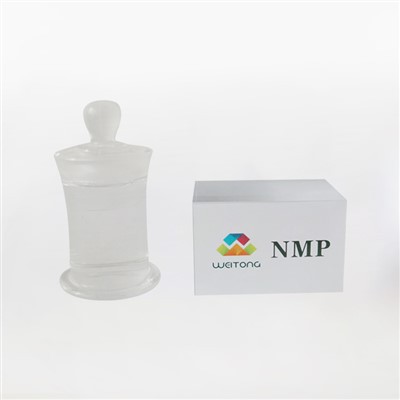
N-Methyl-2-pyrrolidone (NMP) is an organic compound consisting of a 5-membered lactam. It is a colorless liquid, although impure samples can appear yellow. It is miscible with water and with most common organic solvents. It also belongs to the class of dipolar aprotic solvents such as dimethylformamide and dimethyl sulfoxide. It is used in the petrochemical, polymer and battery industries as a solvent, exploiting its nonvolatility and ability to dissolve diverse materials (including polyvinylidene difluoride, PVDF). NMP is produced industrially by a typical ester-to-amide conversion, by treating gamma-butyrolactone with methylamine. Alternative routes include the partial hydrogenation of N-methylsuccinimide and the reaction of acrylonitrile with methylamine followed by hydrolysis. About 200,000 to 250,000 tons are produced annually.
Advantages of NMP
NMP is a highly selective solvent with the advantages of non toxicity, high boiling point, low corrosiveness, high solubility, low viscosity, low volatility, good stability and easy recovery.
NMP is its excellent dispersion properties. NMP is a highly efficient selective solvent with high solubility, low viscosity, and good stability. It is a polar solvent that is used to dissolve the binder, PVDF, so that PVDF can coat the positive aluminum foil.

Industry Applications of NMP
N-methyl pyrrolidone, known for its excellent solubility and high flashpoint, is increasingly popular in various industries, notably in the manufacturing of lithium-ion batteries. Here are some of the industries it is used in:
Electronics and Battery Manufacturing
NMP plays a crucial role in the production of lithium-ion batteries, essential for powering modern electronics and electric vehicles. It is particularly effective in dissolving binding materials used in battery electrodes, contributing to the efficiency and reliability of these batteries.
Pharmaceuticals
In the pharmaceutical industry, NMP is used for the extraction, purification, and crystallization of various drug ingredients. Its effectiveness as a solvent ensures high purity and quality in pharmaceutical products.
Paint and Coating Industry
NMP is a preferred solvent in paint and coating strippers due to its ability to dissolve a wide range of polymers and resins effectively. Its use in this sector underscores its versatility and efficiency.
Cleaning Agents
The solvent properties of NMP make it an excellent choice for cleaning applications, especially in industrial settings. It effectively removes grease, oil, and other contaminants from metal, plastic, and leather surfaces.
Agricultural Products
In agriculture, NMP is used in the formulation of certain pesticides and fertilizers, enhancing their effectiveness and stability.
These applications highlight NMP's versatility as a solvent across various sectors. Its ability to dissolve different materials, coupled with its thermal stability and low toxicity, makes it an indispensable component in many industrial processes.
How is NMP Recycled
NMP can be recycled using a multi-stage distillation process to separate solvents into its components at lower-than-boiling point temperatures. Waste is removed and clean solvent is left. You can expect to recover up to 95% of the used NMP. The battery manufacturer may use upwards of 10,000 to 20,000 NMP per month, which in a year can translate to over 240,000 NMP.
Recycling is an environmental and cost-friendly alternative to buying new NMP and disposing of the used solvent after one use.
With solvent recycling, wasted NMP can be recovered and reused, reducing the cost of buying and disposing of single-use solvent. The recyclability of NMP is a huge benefit as a solvent as it does not pose as a dangerous environmental threat like other solvents when they have been used.
How to Handle NMP
Given its chemical nature, handling NMP requires adherence to specific safety protocols. It is essential to wear appropriate personal protective equipment (PPE), including gloves, goggles, and protective clothing, to avoid skin and eye contact. Work in well-ventilated areas to minimize inhalation risks and use proper respirators if necessary.
Store NMP in a cool, dry, and well-ventilated area, away from direct sunlight and heat sources. Ensure that storage containers are tightly sealed and clearly labeled. It is also crucial to follow local regulations for storing chemicals, particularly for substances like NMP.
In case of a spill or leak, ensure immediate containment and clean-up. Use inert materials like sand or vermiculite to absorb the spill, and dispose of it as hazardous waste according to local environmental regulations. Avoid allowing the solvent to enter waterways or the sewer system.
Disposal of NMP should comply with local environmental regulations. Consider recycling options, as NMP can be effectively recycled and reused, reducing both costs and environmental impact.
Regular training and awareness programs for employees handling NMP are crucial. These programs should cover proper handling, potential health risks, emergency response procedures, and the importance of personal protective equipment.
By understanding and implementing proper handling and storage practices for NMP, industries can ensure a safer work environment while maximizing the benefits of this versatile solvent. This section provides essential guidelines for industries and professionals who regularly work with NMP, emphasizing safety, regulatory compliance, and environmental responsibility.
N-methylpyrrolidone (NMP) is a polar aprotic solvent. It has the advantages of high boiling point, strong polarity, low viscosity, strong solubility, non-corrosion, low toxicity, good chemical and thermal stability, etc. It is mainly used It is used in the fields of aromatic extraction, purification and separation of acetylene, olefins, and diolefins, polymer solvents and polymerization solvents. With the rapid development of domestic polyamide, polyimide, polyphenylene sulfide and other high-strength engineering plastics and high-strength fibers, the quality and demand of N-methylpyrrolidone have been put forward higher requirements.
At present, there are three main industrial production processes for N-methylpyrrolidone: a) γ-butyrolactone (GBL) and monomethylamine (MMA) are reacted to synthesize N-methylpyrrolidone; b) γ-butyrolactone and mixed amines Synthesis of N-methylpyrrolidone by reaction; c) 1,4-Butanediol dehydrogenation-amination to prepare N-methylpyrrolidone. The production capacity of foreign N-methylpyrrolidone is mainly concentrated in the hands of a few large companies. There are more than 10 domestic enterprises engaged in the production of N-methylpyrrolidone, but the scale of the equipment is relatively small, the source of raw materials is many, and the product quality stability is poor , The production technology needs to be improved. At present, the domestic apparent N-methylpyrrolidone annual output is 53 kt/a, and it is growing at an annual rate of 6% to 8%. The prospect of NMP is relatively broad.
NMP (C5H9NO, molecular weight 99, boiling point 203°C) has a pH=7~9. It is weakly alkaline with a slight ammonia smell. It is a colorless to light yellow transparent oily liquid belonging to nitrogen heterocyclic compounds. It has good chemical stability. It is relatively stable in a neutral environment. Due to the pyrrole ring in its molecular structure, NMP is prone to hydrolysis in an alkaline environment. NMP can be oxidized by hydroxyl in the water phase to generate 66 products, of which 24 can be identified. NMP undergoes a hydrolysis reaction in an acidic environment with water to generate 4-methylaminobutyric acid, which is further decomposed into succinic acid semiamide.
And it has high thermal stability. In the absence of water and air, the decomposition temperature is about 350°C. Although the color of NMP turns yellow at 200°C, it does not affect its use. When NMP encounters air and water during use, it is prone to decomposition reaction. In the presence of oxygen and water at the same time, NMP can undergo hydrolysis and oxidation reactions at a low temperature of about 120-200°C.
NMP is used as a solvent in the electrode coating of battery manufacturing. It is highly effective for dissolving polyvinylidene fluoride (PVDF) which is the most common material used in the binding of anodes and cathodes in the production of Lithium (Li) batteries.
NMP is considered the go-to solvent when producing Li batteries as it is less reactive, highly recyclable, and a higher flashpoint then other substitute solvents.
NMP is increasing in demand as automotive industries are required to meet the increasing demand of electric cars. Electric cars require lithium-ion batteries in order to produce, which makes NMP a popular product as it is a key element in the production of batteries.
How to synthesis N-Methyl-2-pyrrolidone
NMP, also known as N-methyl-α-pyrrolidinone; N-methyl-α-pyrrolidone, N-methyl-γ- butyrolactam, N-methyl-2-pyrrolidinone, N-methyl-2-pyrrolidone, n-methylpyrrolidinone, 1-methyl-2-pyrrolidinone and 1-methyl-2-pyrrolidone, is a derivative of γ-butyrolactone. Molecular formula: C5H9NO, molecular weight: 99.1311. NMP is a colorless and transparent liquid with a slight ammonia smell. It is a highpolarity, chemically and thermally stable high-boiling solvent (boiling point: 202 °C). It is completely miscible with water, alcohol, ether, ketone, ethyl acetate, chloroform, and benzene. The solubility of unsaturated hydrocarbons such as alkynes, olefins, and diolefins in NMP is higher than that of saturated hydrocarbons. In addition, a variety of polymers can also be dissolved in NMP.
Based on the raw materials used, several processes such as succinonitrile route, condensation of γ-butyrolactone and methylamine, 4-oxidized methyl butyrate method, and 1,4-succinic acid route for manufacture of NMP were developed. However, the only process currently employed in the industry is the condensation from γ-butyrolactone and methylamine. The process technologies are similar in all NMP producers, yet the main difference is the production method for γ-butyrolactone intermediate. developed a process that included dehydrogenating BDO to γ-butyrolactone and then condensing with methylamine to produce NMP. Mitsubishi Chemical Corporation of Japan developed a process that included hydrogenation of maleic anhydride to γ-butyrolactone and condensation with methylamine to yield NMP. Synthesis of NMP by the condensation of γ-butyrolactone and methylamine in the absence of a catalyst was developed. γ-Butyrolactone and methylamine are reacted at a temperature of 240–285 °C and a pressure of 5.0–8.0 MPa for 2–3 h, and the resulting NMP is purified by fractional distillation to obtain a high-purity product. Its reaction equation is as follows:
The reaction is carried out in two steps. The first step is the reaction of γ-butyrolactone with methylamine to form N-methyl-γ-hydroxybutanamide, which is a reversible reaction and can be carried out at lower temperatures and lower pressure. The second step is dehydrating and cyclizing N-methyl-γ-hydroxybutanamide to NMP under higher temperatures and pressure. The two-step reactions can be carried out batch-wise in an autoclave or continuously in a tubular reactor.
Since the boiling point of NMP (204 °C) is very close to that of the raw material γ-butyrolactone (206 °C), separating them by fractional distillation is difficult. Therefore, a large excess of methylamine is applied in the reaction (molar ratio of methylamine to γ-butyrolactone from 1.5 to 1.8) for complete conversion of γ-butyrolactone, simplifying the product separation process. Anhydrous methylamine can be used as the raw material, but adding some water to the reaction system can increase the selectivity of NMP. The reaction solution is subjected to fractional distillation in the amine removal tower, in which the unreacted methylamine is distilled from the top and recycled to the reactor. The bottom product of the tower is introduced into the light fraction removal tower, and all the remaining water is distilled from the top of the tower. The light fraction is collected from the sideline on the tower's upper section. The bottom product of the light fraction removal tower is introduced into the heavy fraction removal tower. The heavy fraction is removed from the bottom of the tower, and NMP of high purity is obtained from the top. The yield of NMP is up to 99% based on γ-butyrolactone.
Specifications
|
Form |
Powder |
|
Ign. residue |
≤0.5% |
|
InChI key |
WHNWPMSKXPGLAX-UHFFFAOYSA-N |
|
InChI |
1S/C6H9NO/c1-2-7-5-3-4-6(7)8/h2H,1,3-5H2 |
|
Mol wt |
Average Mw ~29,000 |
|
Quality Level |
200 |
N-Methyl-2-pyrrolidone is easily absorbed from the human skin gastrointestinal and respiratory tracts. The permeability of commercial solvents through human skin has been investigated in a study, and the permeability rate of N-Methyl-2-pyrrolidone was found to be higher than that of other solvents. It is quickly distributed in most organs, with a relatively high concentration in the sexual organs. Repeated exposures may be one of the reasons for infertility. The volume of distribution (Vd) of N-Methyl-2-pyrrolidone is 0.7 L/kg, and the half-life of unchanged N-Methyl-2-pyrrolidone in the plasma after oral or dermal administration and inhalation exposure are 9–12 h and 4 h, respectively. N-Methyl-2-pyrrolidone is hyroxylated to 5-hydroxy-N-methyl-2-pyrrolidone (5-HNMP) by the isoform 1E of cytochrome P450 (CYP1E) and oxidized to N-methylsuccinimide (MSI); MSI is then hyroxylated to 2-hydroxy-N-methylsuccinimide (2-HMSI). 2-Pyrrolidone is reported as another metabolite of N-Methyl-2-pyrrolidone.
In rats, it is absorbed rapidly after inhalation, oral, and dermal administration, distributed throughout the organism, and eliminated mainly by hydroxylation to polar compounds, which are excreted via urine. About 80% of the administered dose is excreted as it and its metabolites within 24 hours. A probably dose dependent yellow coloration of the urine in rodents is observed. The major metabolite is 5-hydroxy-N-methyl-2-pyrrolidone.
FAQ