



Stabilization Of Suspensions
Hangzhou Weitong Nanomaterials Co., Ltd. is an innovative enterprise focusing on the field of nanomaterials, founded in 2015. Our factory has an efficient production capacity and is able to produce a wide range of high-quality products. Our factory adopts a strict quality management system to ensure that the products meet high quality standards. We have a professional technical team and advanced production equipment, as well as perfect after-sales service, to provide customers with a full range of solutions. We strive for continuous innovation and optimization to meet and exceed our customers' needs and expectations, and move forward to become a world-class chemical company.

Why Choose US
Our factory:Hangzhou Weitong Nanomaterials Co., Ltd. is an innovative enterprise focusing on the field of nanomaterials, founded in 2015. Our factory has an efficient production capacity and is able to produce a wide range of high-quality products.
Our product:Our range of NVP-based products covers various series tailored to different industries. This includes the homopolymer series (K15-K120), copolymer series (VA64 powder, V64E, VA64W, 73W, 37E, 37W), and cross-linked series (PVPP XL-10, PVPP-10, povidone-iodine pvpI). These products find applications across diverse sectors, serving as stabilizers, dispersants, coatings, inks, and adhesives.
Quality control:We have the ISO9001 certificate, and we strictly follow GMP production standards for production.
Good after-sale service:We have a sound after-sales service system, so whatever you have any doubt about the product, you can strictly contact us, we will give you a satisfied plan.
What is Polyvinylpyrrolidone K Powder
Polyvinylpyrrolidone, also known as povidone or PVP, is used in the pharmaceutical industry as a synthetic polymer vehicle for dispersing and suspending drugs. It has multiple uses, including as a binder for tablets and capsules, a film former for ophthalmic solutions, to aid in flavoring liquids and chewable tablets, and as an adhesive for transdermal systems. Povidone has the molecular formula of (C6H9NO)n and appears as a white to slightly off-white powder. Povidone formulations are widely used in the pharmaceutical industry due to their ability to dissolve in both water and oil solvents. The k number refers to the mean molecular weight of the povidone. Povidones with higher K-values (i.e., k90) are not usually given by injection due to their high molecular weights. The higher molecular weights prevent excretion by the kidneys and lead to accumulation in the body.
Advantages of Polyvinylpyrrolidone K Powder
1. Stable under normal temperature and pressure.
2. Avoid light, open flame, and high temperature. It has excellent solubility, low toxicity, film-forming properties, complexing properties, surface activity and chemical stability. Soluble in water, chlorine-containing solvents, ethanol, amines, nitroalkanes and low molecular fatty acids; compatible with most inorganic salts and various resins, insoluble in ether and acetone
Specifications
|
Color |
White |
|
Physical Form |
Powder |
|
Merck Index |
14,7697 |
|
Solubility Information |
Soluble in water and most organic solvents. |
|
Quantity |
25 g |
|
Formula Weight |
10 kd |
|
Chemical Name or Material |
Polyvinylpyrrolidone |
Multifunctional Role of Polyvinylpyrrolidone in Pharmaceutical Formulations
Polyvinylpyrrolidone (PVP), a non-ionic polymer, has been employed in multifarious fields such as paper, fibers and textiles, ceramics, and pharmaceutics due to its superior properties. Especially in pharmacy, the properties of inertness, non-toxicity, and biocompatibility make it a versatile excipient for both conventional formulations and novel controlled or targeted delivery systems, serving as a binder, coating agent, suspending agent, pore-former, solubilizer, stabilizer, etc. PVP with different molecular weights (MWs) and concentrations is used in a variety of formulations for different purposes. PVP-related researches mainly in recent 10 years were collected, and its main pharmaceutical applications were summarized as follows: (i) improving the bioavailability and stability of drugs, (ii) improving the physicomechanical properties of preparations, (iii) adjusting the release rate of drugs, and (iv) prolonging the in vivo circulation time of liposomes. Most of these applications could be explained by the viscosity, solubility, hydrophilicity, and hydrogen bond–forming ability of PVP, and the specific action mechanisms for each application were also tried to figure out. The effect of PVP on bioavailability improvement establishes it as a promising polymer in the emerging controlled or targeted formulations.

Polyvinylpyrrolidone Applications
As a synthetic water-soluble polymer compound, PVP has the general properties of water-soluble polymer compounds, including colloidal protective effects, film-forming properties, adhesion, hygroscopicity, solubilization or aggregation, but it is the most distinctive and therefore is subject to People attach great importance to its excellent solubility and physiological compatibility. Among synthetic polymers, PVP is soluble in both water and most organic solvents, has very low toxicity, and has good physiological compatibility. It is rare, especially in medicine, food, and cosmetics, which are closely related to people's health. In the field, as the price of its raw material butyrolactone decreases, it will definitely show good prospects for its development.
Medicine & Health
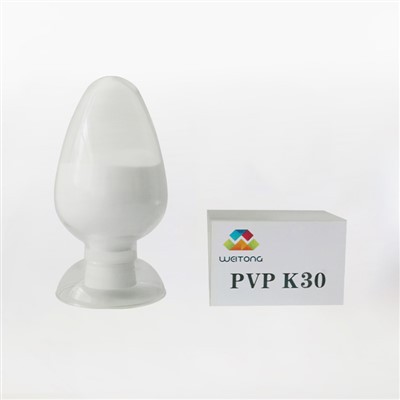
PVP has excellent physiological inertness, does not participate in human metabolism, and has excellent biocompatibility. It does not cause any irritation to skin, mucous membranes, eyes, etc. Pharmaceutical grade PVP is one of the three new pharmaceutical excipients advocated internationally. It can be used as a binder for tablets and granules, a cosolvent for injections, and a flow aid for capsules; as a detoxifier, prolongation agent, and lubricant for eye drops. Agents and coating film-forming agents, dispersants for liquid preparations and stabilizers for enzymes and heat-sensitive drugs, and can also be used as cryogenic preservatives. Used in contact lenses to increase their hydrophilicity and lubricity. PVP K30 has been approved by the national pharmaceutical regulatory authorities and officially launched on the market. The company also supplies povidone K30 with an approval number.
From a biological point of view, the molecular structure of PVP is similar to that of a simple protein model, even its water solubility, ability to cooperate with certain small molecules, and its ability to be precipitated by certain protein precipitants such as ammonium sulfate and ammonium sulfate. Precipitating properties such as trichloroacetic acid, tannins and phenols are also compatible with proteins. As a result, PVP is widely used as an excipient for pharmaceutical preparations. The specific applications are as follows: ① Used as a binder for preparations ② Co-precipitating agent ③ As a co-solvent or crystallization inhibitor in injections ④ Coating or film-forming agent ⑤ The controlled release of delaying agents and sustained-release drugs can extend the action time of the drugs ⑥ Artificial vitreous body and cornea ⑦ Surgical dressing tape ⑧ PVP iodine disinfectant. In addition, PVP can also be used as a colorant and X-ray contrast agent; it can be used in various dosage forms such as tablets, granules, and liquids. It has the functions of detoxification, hemostasis, increasing dissolution concentration, preventing peritoneal adhesion, and promoting erythrocyte sedimentation rate.
Food processing
PVP itself is not carcinogenic, has good food safety, and can form complexes with specific polyphenol compounds (such as tannins). In food processing, it is mainly used as a clarifier and stabilizer for beer, juice, wine and other food products. PVP can form complexes with specific polyphenolic compounds (such as tannins), allowing it to play a clarifying and anti-coagulant role in fruit drinks. For example, Buschke H and others added 0.01% ~0.02% soluble PVP to the fermentation tank, which can effectively reduce its freezing point. The use of PVP in the production process of wine, vinegar, etc. can also have the same effect. Cross-linked PVP is particularly widely used in beer and tea beverages. Polyphenols in beer can combine with proteins in beer to form tannin macromolecular complexes, which will seriously affect the flavor of beer and shorten its shelf life. Cross-linked polyvinylpyrrolidone (PVPP) can complex with tannins and anthocyanins in beer, thereby clarifying the beer, improving the storage stability of the beer, and extending the shelf life. In tea beverages, the use of PVPP can appropriately reduce the content of tea polyphenols, and PVPP does not remain in tea beverages and can be reused, greatly reducing costs.
Daily cosmetics
In the consumption structure of PVP, the cosmetics industry in developed countries accounts for 30% to 50%, and my country accounts for 70% to 80%. Since PVP has extremely low toxicity and physiological inertness, it is non-irritating to the skin and eyes, and has a long-term record of use in the medical field, so it is safe to be used in cosmetics, etc. In daily cosmetics, PVP and copolymers have good dispersion and film-forming properties. PVP has a protective colloid effect in emulsions and can be used in fatty and non-fatty pastes as setting liquid, hair spray and friction. Styling agent for silk, opacifier for hair conditioner, foam stabilizer for shampoo, dispersing agent and affinity agent for wave styling agent and hair dye. Adding PVP to creams, sunscreens, and hair removers can enhance the moisturizing and lubricating effects.
Solubility: Soluble in water, ethanol and chloroform and insoluble in ether. This is measured by the OT-42 method.
Dichromate precipitation test: In 5 mL of2% sample solution, add 5 mL dilute hydrochloric acid solution (TS-117), further add 5 mL of water plus 2 mL of 10% potassium dichromate solution and 2ml. This should form an orange precipitate.
Take 75 mg of cobalt nitrate and 300 mg of ammonium thiocyanate for being dissolved in 2ml of water; add 5 mL of 2% aqueous sample solution; after the mixing, add dilute hydrochloric acid test solution (TS-117) for acidification. This should form light blue precipitate.
Take 5 mL of 2% sample solution; add 1 mL of 25% hydrochloric acid, 5 mL of 5% barium chloride and 1 mL 5% molybdenum tungsten phosphoric acid solution. This should generate a lot of white precipitate which gradually turns blue in the sunlight.
The pH value of 5% sample solution should be 3.0 to 3.7. This is measured by conventional means.
Adding a few drops of iodine test solution (TS-124) to 5 mL of 0.5% sample solution should produce a deep red color.
Take 1 g of sample, add water to 10 ml as a suspension, add 0.1 mL of iodine test solution (TS-124), after mixing by shaking for 30s, iodine test solution should fade (to distinguish polyvinylpyrrolidone due to that polyvinylpyrrolidone can form red color). Add 1 mL of starch test solution (TS-235), after shaking and mixing, there should be no blue color formed. to produce blue.

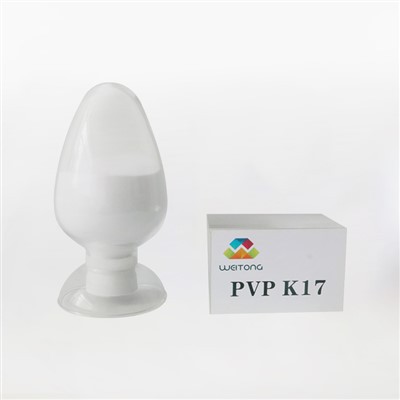
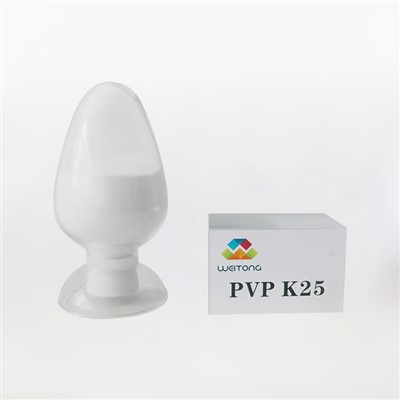
Povidone (polyvinylpyrrolidone, PVP K30, PVP K17, PVP K90) is used in the pharmaceutical industry as a synthetic polymer vehicle for dispersing and suspending drugs. Povidone Polyvinylpyrrolidone PVP K17 K30 K90, also commonly called Polyvidone or Povidone, is a water-soluble polymer made from the monomer N-vinylpyrrolidone.
Density: 1.144g/cm3
Boiling point: 217.6°C
Melting point: 130°C
Flash point: 93.9°C
Average molecular weight: 8000-700000
Stability: Stable under normal temperature and pressure
Solubility: Very soluble in water and halogenated hydrocarbon solvents, alcohols, amines, nitroalkanes and low molecular fatty acids, etc., insoluble in a few solvents such as acetone, ether, turpentine, aliphatic hydrocarbons and alicyclic hydrocarbons. Compatible with most inorganic acid salts and various resins.
Properties: Hydrophilic, easily flowing white or nearly white powder with slight odor.

Molecular Structure
Povidone Polyvinylpyrrolidone PVP K17 K30 K90 CAS 9003-39-8 and Povidone Iodine CAS 25655-41-8
|
Product Name: |
Povidone (Polyvinylpyrrolidone) |
Povidone Iodine |
|
Synonyms: |
PVP, Povidonum Poly Vinyl Pyrrolidone |
PVP Iodine, PVP-I, Povidone-Iodine, Povidone Iodinated, Polyvinylpyrrolidone Povidonum iodinatum |
|
Types: |
PVP K17, PVP K30, PVP K90 |
-------- |
|
Grade Types: |
Food Grade & Pharmaceutical Grade |
|
|
Characteristics: |
White or yellowish-white powder or flakes, hygroscopic |
Yellowish-brown or reddish-brown, amorphous powder. |
|
CAS Number: |
9003-39-8 |
25655-41-8 |
|
ASSAY |
According to K Value |
Iodine: 9%~12% |
|
Formula: |
(C6H9NO)n |
|
|
Package: |
25Kg/Fiber Drum, Cardboard Drum, Paper Drum |
25Kg/Drum |
Povidone Polyvinylpyrrolidone PVP K17 K30 K90 exists in white powder or aqueous solution.
Solubility: Povidone Polyvinylpyrrolidone PVP K17 K30 readily dissolve in water, alcohol, amine and halohydrocarbon, but are not dissolved in acetone and aether etc.. Povidone Polyvinylpyrrolidone PVP K17 K30 has good solubility, biocompatibility, and physiologically inert, film-forming character, colloid protect ability and compound ability to many organic or inorganic compounds. Povidone Polyvinylpyrrolidone PVP K17 K30is also steady to acid, salt and heat, so it is widely used.
Povidone Polyvinylpyrrolidone PVP K17 K30 K90 exists as white or milk white powder or colorless or slight yellow transparent liquid. It can dissolve in water and a variety of organic solvents. It has good hygroscopicity, film-forming capability, complexing ability and physiological compatibility.
Specification(Indexes) of Povidone Polyvinylpyrrolidone
|
PVP-K |
K12 |
K15 |
K17 |
K25 |
K30 |
K90 |
|
|
Appearance |
White fine powder |
||||||
|
K value |
10.2-13.8 |
12.75-17.3 |
15.3-18.4 |
22.5-27.0 |
27-32.4 |
81-97.2 |
|
|
Vinylpyrrolidone |
USP26) %max |
0.1 |
0.1 |
0.1 |
0.1 |
0.1 |
0.1 |
|
(USP36/EP6) ppm max |
10 |
10 |
10 |
10 |
10 |
10 |
|
|
Moisture, % max |
5.0 |
5.0 |
5.0 |
5.0 |
5.0 |
5.0 |
|
|
Solid content, % min |
95 |
95 |
95 |
95 |
95 |
95 |
|
|
pH value (5%in aqueous solution) |
3.0-5.0 |
3.0-5.0 |
3.0-5.0 |
3.0-5.0 |
3.0-5.0 |
4.0-7.0 |
|
|
Sulphate Ash, % max |
0.1 |
0.1 |
0.1 |
0.1 |
0.1 |
0.1 |
|
|
Nitrogen content, % |
11.5-12.8 |
11.5-12.8 |
11.5-12.8 |
11.5-12.8 |
11.5-12.8 |
11.5-12.8 |
|
|
2-Pyrrolidone (Impurity B), % max |
3.0 |
3.0 |
3.0 |
3.0 |
3.0 |
3.0 |
|
|
Aldehyde(as acetaldehyde), ppm max |
500 |
500 |
500 |
500 |
500 |
500 |
|
|
Heavy metal (as Pb), ppm max |
10 |
10 |
10 |
10 |
10 |
10 |
|
|
Hydrazine, ppm max |
1 |
1 |
1 |
1 |
1 |
1 |
|
|
Peroxide(As H2O2), ppm max |
400 |
400 |
400 |
400 |
400 |
400 |
|
Manufacturing Info
Active|when polyvinyl pyrrolidone is used as food additive it must be as insol cross-linked polymer of a grade such that, after 3 hr of refluxing with water, 5% acetic acid & 50% alcohol, no more than 50 mg/kg (ppm) extractables may be obtained with each solvent; must be removed by filtration.|although povidone formulated with iodophor did not enhance the rate of wound or infection, it offered no therapeutic benefit when compared with control wounds treated with saline solution. Iodophor surgical scrub solutions should not be used on broken skin.|complexing iodine with povidone or surfactants significantly limits the quantity of free iodine. Reduction of free iodine level eliminates the adverse properties of staining, instability, and irritation and also alters bactericidal activity.|in the plastics industry, polyvinyl pyrrolidone is used as a particle-size regulator, suspending agent and viscosity modifier in two-phase polymerization systems for vinyl chloride, vinyl esters, styrene, acrylics & other monomers.
FAQ