



Bulk Raw Materials
Hangzhou Weitong Nanomaterials Co., Ltd. is an innovative enterprise focusing on the field of nanomaterials, founded in 2015. Our factory has an efficient production capacity and is able to produce a wide range of high-quality products. Our factory adopts a strict quality management system to ensure that the products meet high quality standards. We have a professional technical team and advanced production equipment, as well as perfect after-sales service, to provide customers with a full range of solutions. We strive for continuous innovation and optimization to meet and exceed our customers' needs and expectations, and move forward to become a world-class chemical company.


Why Choose US
Our factory:Hangzhou Weitong Nanomaterials Co., Ltd. is an innovative enterprise focusing on the field of nanomaterials, founded in 2015. Our factory has an efficient production capacity and is able to produce a wide range of high-quality products.
Our product:Our range of NVP-based products covers various series tailored to different industries. This includes the homopolymer series (K15-K120), copolymer series (VA64 powder, V64E, VA64W, 73W, 37E, 37W), and cross-linked series (PVPP XL-10, PVPP-10, povidone-iodine pvpI). These products find applications across diverse sectors, serving as stabilizers, dispersants, coatings, inks, and adhesives.
Quality control:We have the ISO9001 certificate, and we strictly follow GMP production standards for production.
Good after-sale service:We have a sound after-sales service system, so whatever you have any doubt about the product, you can strictly contact us, we will give you a satisfied plan.
What is Butyrolactone
Gamma-butyrolactone (GBL) or γ-butyrolactone is a hygroscopic, colorless, water-miscible liquid with a weak, characteristic odor. It is the simplest 4-carbon lactone. It is mainly used as an intermediate in the production of other chemicals, such as N-methyl-2-pyrrolidone. In humans, GBL acts as a prodrug for gamma-hydroxybutyric acid (GHB) and is often used as a recreational drug. GHB acts as a central nervous system (CNS) depressant with effects similar to those of barbiturates.

1,4-Butanediol is a chemical. It's used as a source of gamma-hydroxybutyrate (GHB), a recreational drug with euphoric and sedative effects.
1,4-Butanediol is converted to GHB in the body. GHB slows down the brain, which can cause loss of consciousness along with dangerous slowing of breathing and other vital functions.
People use 1,4-Butanediol for muscle strength, obesity, insomnia, and other purposes, but there is no good scientific evidence to support any use.
γ-Butyrolactone is produced industrially by dehydrogenation of 1,4-butanediol at a temperature of 180–300 °C and atmospheric pressure in the presence of a copper catalyst.
Dehydrocyclization of 1,4-butanediol to form γ-butyrolactone in the presence of a copper catalyst
The yield of this process is approximately 95%. The purification takes place with a liquid-gas-phase extraction.
In the laboratory, it may also be obtained via the oxidation of tetrahydrofuran (THF), for example with aqueous sodium bromate.An alternative route proceeds from GABA via a diazonium intermediate.
As a lactone, GBL is hydrolyzed under basic conditions, for example in a sodium hydroxide solution into sodium gamma-hydroxybutyrate, the sodium salt of gamma-hydroxybutyric acid. In acidic water, a mixture of the lactone and acid forms exists in an equilibrium. These compounds then may go on to form the polymer poly(4-hydroxybutyrate) as well as the dimer 1,6-Dioxecane-2,7-dione. When treated with a non-nucleophilic base, such as lithium diisopropylamide, GBL undergoes deprotonation of the alpha carbon atom to the carbonyl. The related compound caprolactone can be used to make a polyester in this manner.
Polymerization
The ring-opening polymerization of butyrolactone gives polybutyrolactone. The resulting reverts to the monomer by thermal cracking.It is claimed that poly(GBL) is competitive with commercial biomaterial poly(4-hydroxybutyrate), or P4HB. It is further claimed that poly(GBL) is cheaper to make than P4HB, although both are bio-derived.
Interactions of 1,4-Butyrolactone
Alcohol (Ethanol) interacts with 1,4-BUTANEDIOL
Alcohol can cause sleepiness and drowsiness. Taking 1,4-butanediol along with alcohol increases the sleepiness and drowsiness caused by alcohol. Do not take 1,4-butanediol if you have been drinking.
Medications for pain (Narcotic drugs) interacts with 1,4-BUTANEDIOL
Some medications for pain can cause sleepiness and drowsiness. Taking 1,4-butanediol along with some medications for pain increases the sleepiness and drowsiness caused by these medicationss. Do not take 1,4-butanediol if you are taking medications for pain.
Sedative medications (CNS depressants) interacts with 1,4-BUTANEDIOL
1,4-Butanediol might cause sleepiness and slowed breathing. Some medications, called sedatives, can also cause sleepiness and slowed breathing. Taking 1,4-Butanediol with sedative medications can cause breathing problems and/or too much sleepiness.
Moderate Interaction
Be cautious with this combination
Amphetamines interacts with 1,4-BUTANEDIOL
Amphetamines are drugs that can speed up your nervous system. 1,4-Butanediol is changed in the body to gamma-hydroxybutyrate (GHB). GHB can slow down your nervous system. Taking 1,4-butanediol along with amphetamines can lead to serious side effects.
Medications used to prevent seizures (Anticonvulsants) interacts with 1,4-BUTANEDIOL
1,4-Butanediol may increase the risk of seizures. Taking 1,4-Butanediol may decrease the effects of medications used to prevent seizures and increase the risk of seizures.
Naloxone (Narcan) interacts with 1,4-BUTANEDIOL
1,4-Butanediol is changed by the body to another chemical called GHB. GHB can affect the brain. Taking naloxone along with 1,4-butanediol might decrease the effects of 1,4-butanediol and GHB on the brain.
Ritonavir (Norvir) interacts with 1,4-BUTANEDIOL
Ritonavir might decrease how quickly the body gets rid of 1,4-butanediol. This could cause serious side effects.
Saquinavir (Fortovase, Invirase) interacts with 1,4-BUTANEDIOL
Saquinavir might decrease how fast the body gets rid of 1,4-butanediol. This could cause serious side effects.
Divalproex sodium (Depakote) interacts with 1,4-BUTANEDIOL
1,4-Butanediol is changed in the body to GHB. Taking divalproex sodium at the same time as 1,4-butanediol might decrease how quickly the body gets rid of GHB. This could cause serious side effects.
Topiramate (Topamax) interacts with 1,4-BUTANEDIOL
1,4-Butanediol is changed in the body to GHB. Taking topiramate at the same time as 1,4-butanediol might decrease how quickly the body gets rid of GHB. This could cause serious side effects.
Properties of 1,4-Butyrolactone
γ-butyrolactone is a colorless, non-toxic and transparent oily liquid, with a certain hygroscopicity and slight odor, is a high boiling point, strong solubility, good electrical properties and stability of the solvent, and water, alcohol, esters, ethers, ketones and aromatics miscibility, can dissolve many organic and inorganic compounds, safe and easy to use. It is also an important raw material for organic synthesis, mainly used for the synthesis of pyrrolidone series products, cyclopropylamine, acetyl-γ-butyrolactone, etc.. In addition,γ-butyrolactone is also used in agricultural chemicals, polymers and dyes, printing solvents, petrochemical extractants, and can also produce spices, pharmaceutical intermediates, rust removers, etc.
|
Properties |
|
|
Chemical formula |
C4H6O2 |
|
Molar mass |
86.090 g·mol−1 |
|
Appearance |
Colorless liquid |
|
Odor |
Weak characteristic odor, comparable to stale water, synthetic melon aroma or burnt plastic |
|
Density |
1.1286 g/mL (15 °C), 1.1296 g/mL (20 °C) |
|
Melting point |
−43.53 °C (−46.35 °F; 229.62 K) |
|
Boiling point |
204 °C (399 °F; 477 K) |
|
Solubility in water |
Miscible |
|
Solubility |
Soluble in CCl4, methanol, ethanol, acetone, benzene, ethyl ether |
|
log P |
−0.76[3] |
|
Acidity (pKa) |
4.5 |
|
Refractive index (nD) |
1.435, 1.4341 (20 °C) |
|
Viscosity |
1.7 cP (25 °C) |
Precautions for Using 1,4-butyrolactone
When taken by mouth
1,4-Butanediol is unsafe. It has been linked with very serious side effects, including trouble breathing, tremors, hallucinations, and death. Pregnancy and breast-feeding: 1,4-Butanediol is unsafe. Don't use it.
Slow heart rate (bradycardia)
Gamma-hydroxybutyrate (GHB) is a chemical that is formed when the body breaks down 1,4-butanediol. GHB can slow the heart and may make bradycardia worse in people who have this condition.
Epilepsy
GHB is a chemical that is formed when the body breaks down 1,4-butanediol. GHB can cause seizures and might make epilepsy worse.
Surgery
1,4-Butanediol can slow down the central nervous system (CNS). Anesthesia and some other medications used during surgery have the same effect. Using 1,4-butanediol along with these other medications might slow down the CNS too much. Stop using 1,4-butanediol at least 2 weeks before a scheduled surgery.
Application of 1,4-Butyrolactone
γ-butyrolactone is a high boiling point solvent with strong solubility, non-toxicity, safe and convenient use and management; used as an extractant for butadiene, aromatics and advanced greases in petroleum processing; used as a spinning solvent for acrylonitrile fiber in the chemical fiber industry, and is a dyeing aid for wool, nylon, acrylonitrile and other fibers; in organic synthesis, GBL also has a wide range of uses, it is the synthesis of α-pyrrolidone, N-methylpyrrolidone, vinylpyrrolidone, acetyl-γ-butyrolactone. Raw materials such as cyclopropylamine, which is an intermediate for the synthesis of insecticides, herbicides, drugs for brain rehabilitation, cipropylhaloperic acid, vitamin B1, chlorophyll, etc., and is also used for the synthesis of chlorophenoxybutyric acid herbicides, plant growth regulators.
What is Polytetramethylene Ether Glycol
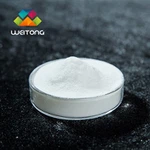
Polytetramethylene ether glycol (PTMEG) is a waxy, white solid that melts to a clear, colorless, viscous liquid near room temperature. PTMEG is produced by the catalyzed polymerization of tetrahydrofuran (THF). Spandex production accounts for the bulk of global PTMEG consumption. Other end uses include polyurethane elastomers (thermoplastic polyurethanes, cast urethane elastomers, and urethane adhesives, sealants, and surface coatings) and copolyester-ether elastomers.

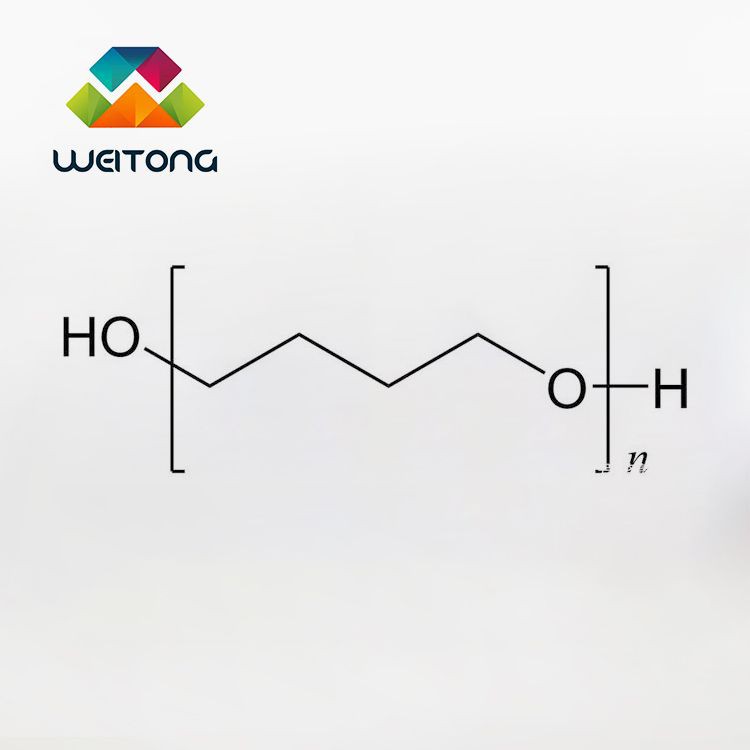
PTMG (Poly(tetramethylene ether)glycol / PTMG) is a linear polyether glycol with hydroxyl groups on both ends. As a polyol, it reacts readily with isocyanates (for example MDI, TDI), etc. to make resins with excellent properties.
PTMG is a linear polyether glycol with hydroxyl groups on both ends.
|
Common Names |
Poly-tetramethylene-ether-glycol Poly-oxy-tetramethylene-glycol |
|
Structure |
HO-(CH2CH2CH2CH2O)n-H |
|
CAS No |
25190-06-1 |
|
Japan, Chemical Substances Control Law METI-No. |
(7)-129 |
|
Japan, Poisonous and Deleterious Substances Control Law |
Not applicable. |
|
Japan, Fire Services Law |
Hazardous Material Class 4 PetroleumsNo.3 Hazardous Rank Ⅲ |
|
Hazardous Material Class 4 PetroleumsNo.4 Hazardous Rank Ⅲ |
|
|
Combustible Materials, Flammable Solids |
Molecular Structure of Polytetramethylene Ether Glycol
Polytetramethylene Ether Glycol (PTMEG) is the premier polyether polyol used worldwide in the manufacture of high-performance polyurethane elastomers. Known for its many performance attributes and processing advantages, PTMEG is used in a variety of applications across multiple industries. These applications include polyurethane resins, prepolymers, coatings, adhesives, cast polyurethane resins, spandex fibers, and more.
Superior resistance to hydrolytic cleavage
Excellent flexibility and property retention at low temperatures
High resiliency and rebound properties
Excellent mechanical and dynamic properties, as well as low hysteresis
Outstanding impingement abrasion resistance
Good processing characteristics
|
Grade |
PTMG250 |
PTMG650 |
PTMG1000 |
PTMG2000 |
PTMG3000 |
|
Appearance |
Colorless transparent liquid |
Colorless transparent liquid |
Solid white wax |
Solid white wax |
Solid white wax |
|
Odor |
Odorless |
Odorless |
Odorless |
Odorless |
Odorless |
|
Avg. Molecular Wt. |
225 |
650 |
1000 |
2000 |
2900 |
|
Freezing point(℃) |
-20 |
11 |
17 |
20 |
21 |
|
Flash point(℃) |
181 |
237 |
247 |
240 |
246 |
|
Specific gravity(40/4℃) |
― |
0.982 |
0.979 |
0.976 |
0.974 |
|
Viscosity |
50(20℃) |
160(40℃) |
320(40℃) |
1400(40℃) |
3450(40℃) |
|
Specific heat |
― |
― |
2.0(40℃) |
2.0(40℃) |
― |
Physical Forms of PTMEG Grades
The different grades of PTMEG are available in a variety of physical forms, which in turn affect their processing attributes. PTMEG 650, for example, has a softening point of 11°C (52°F) and can be a liquid at room temperature. PTMEG 1000, along with the other offerings in higher molecular weight grades, appears in the form of low-melting waxy white solids, with softening points starting at about 24°C (75°F). Processors must heat higher molecular weight grades in order to liquefy and discharge them from drums or ISO Tanks.
It's important to note that drums are rolled when re-melted, to avoid segregation of the various molecular weight fractions that make up PTMEG. Gantrade can supply the viscosity temperature profiles for each of the grades of PTMEG diols as you evaluatePTMEG grade selection for your distinct applications.
PTMEG polyols are non-hazardous, stable products with a low order of toxicity. These polyols are stable under proper storage and handling conditions and possesses a high flashpoint. Always prevent electrostatic discharge and ensure adequate ventilation in work and storage areas when handling PTMEG.
PTMG is hygroscopic and will degrade if exposed to oxygen or air, so it should be well-sealed with dry nitrogen.
Storage and Handling
PTMG is a white, waxy sold at room temperature, but will become a clear, colorless liquid upon heating. If it has solidified in the drum, it can be melted by holding the drum at about 70℃ for 24 hours. Avoid localized heating however. For storage in the liquid state, it is recommended to maintain temperature at less than 50℃.
PTMG250 is classified under the Japanese Fire Services Act as hazardous materials, Class 4, Petroleums No.3, Hazardous Rank III. PTMG650 and 850 are classified under the Japanese Fire Services Act as hazardous materials, Class 4, Petroleums No.4, Hazardous Rank III. Volatility is low, and it is unlikely to catch fire at room temperature. But if it is burning, extinguish the fire with dry chemical, alcohol-resistant foam, or large quantities of water. Although PTMG has relatively low toxicity and is relatively safe, use standard protective equipment such as goggles and gloves when handling it.