



Dispersant
What is Dispersant
A dispersant or a dispersing agent is a substance, typically a surfactant, that is added to a suspension of solid or liquid particles in a liquid (such as a colloid or emulsion) to improve the separation of the particles and to prevent their settling or clumping. Dispersants are widely used to stabilize various industrial and artisanal products, such as paints, ferrofluids, and salad dressings. The plasticizers or superplasticizers, used to improve the workability of pastes like concrete and clay, are typically dispersants. The concept also largely overlaps with that of detergent, used to bring oily contamination into water suspension, and of emulsifier, used to create homogeneous mixtures of immiscible liquids like water and oil. Natural suspensions like milk and latex contain substances that act as dispersants.
Advantages of Dispersant
Adsorbed on the surface of solid particles to reduce the interfacial tension between liquid-liquid or solid-liquid. Make the surface of agglomerated solid particles easy to wet.
Polymer dispersants form an adsorption layer on the surface of solid particles, which increases the charge on the surface of solid particles and increases the reaction force between particles that forms a three-dimensional hindrance.
Form a bilayer structure on the surface of the solid particles. The polar end of the outer dispersant has a strong affinity with water, which increases the degree of wetting of the solid particles by water. The solid particles are kept apart due to electrostatic repulsion.
Make the system uniform, increase the suspension performance, prevent precipitation, and make the physical and chemical properties of the entire system the same.


Why Choose US
Our factory:Hangzhou Weitong Nanomaterials Co., Ltd. is an innovative enterprise focusing on the field of nanomaterials, founded in 2015. Our factory has an efficient production capacity and is able to produce a wide range of high-quality products.
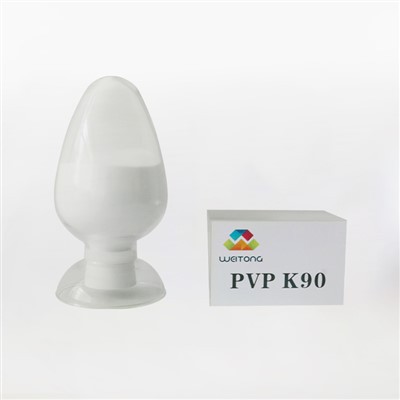
Our product:Our range of NVP-based products covers various series tailored to different industries. This includes the homopolymer series (K15-K120), copolymer series (VA64 powder, V64E, VA64W, 73W, 37E, 37W), and cross-linked series (PVPP XL-10, PVPP-10, povidone-iodine pvpI). These products find applications across diverse sectors, serving as stabilizers, dispersants, coatings, inks, and adhesives.
Quality control:We have the ISO9001 certificate, and we strictly follow GMP production standards for production.
Good after-sale service:We have a sound after-sales service system, so whatever you have any doubt about the product, you can strictly contact us, we will give you a satisfied plan.
Types of Dispersant
Surfactants are one of the most common and widely used types of dispersants. It includes anionic surfactants, cationic surfactants, nonionic surfactants and amphoteric surfactants. These dispersants are able to facilitate the dispersion of solid particles by regulating the surface tension of the liquid and provide good emulsification properties. Surfactants are widely used in industries such as pigments, coatings, inks, detergents and personal care products.
Colloidal dispersants are a class of dispersants that form colloidal solutions and remain dispersed. They enable solid particles to form colloidal particles, providing better dispersion and stability. Colloidal dispersants are widely used in pharmaceuticals, food, coatings and cosmetics, for example, colloidal silver in medical antimicrobial products and nanoparticle dispersants in electronic materials.
Polymer dispersants are a class of dispersants consisting of polymer compounds. They are able to provide good dispersion and stability by adsorbing on the surface of solid particles to form a covering layer. Polymer dispersants are widely used in industries such as oilfield exploration, inks, adhesives and paper manufacturing, e.g. polyacrylamide is used as a dispersant in water treatment.
Filler and particle dispersants are a class of dispersants for specific particles and fillers. They can improve the dispersibility and wettability of fillers and particles, and improve the quality and performance of products. These dispersants are widely used in industries such as rubber, plastics, ceramics and composites.
Bio-dispersants are a class of environmentally friendly dispersants developed in recent years. They are usually based on natural products or products produced by microbial fermentation and have good biodegradability and environmental sustainability. Biodispersants are increasingly used in cosmetics, food, pharmaceuticals and renewable energy.
Working Principle of Dispersant
Dispersants, also called dispersing agents, are chemical agents used to break up oil into smaller droplets in the water column. Dispersants can be applied on surface oil or below the surface, closer to an uncontrolled release of crude oil from a well blowout source. In an oil spill, these smaller oil droplets disperse into the water column where they are transported by currents and subjected to other natural processes such as dissolution and biodegradation. Dispersant use is one of several response tools that may be considered in coastal waters to minimize the overall environmental impacts of an oil spill.
Oil released to the environment undergoes a variety of physical, chemical, and biological processes that begin to transform or “weather” the oil almost immediately. Dispersants are most effective when applied immediately following a spill, before the oil has weathered.
Multiple environmental factors influence the effectiveness of dispersants including water salinity, water temperature, and conditions at sea. The type of oil will also influence the effectiveness of dispersants; heavy crude oils generally do not disperse as well as light- to medium-weight oils.

The Dispersion Process
The dispersion process involves three stages:
Wetting of particles (pre-mixing)
Separation of particles (achieved by mechanical means)
Stabilization of particles (to overcome Van der Waals attractive forces)
The first and third stages can be improved by the use of effective dispersing/stabilizing agents, with the third stage being the most critical to optimize the performance of a system. That’s because the third stage controls the final quality and stability of the dispersion system.
Dispersants achieve stability via steric stabilization which is based on the adsorption of polymeric materials to particle surfaces to overcome Van der Waals attractive forces. The required properties for effective stabilization are:
Strong adsorption of stabilizing polymer to the particle surface
Optimum chain length (too long and it can fold back and compress the steric barrier; too short and it will not overcome Van der Waals forces)
Good solubility in the medium being used during dispersion
Compatibility with the resin after the solvent has evaporated
How Are Dispersants Added
Most dispersants are pourable liquids, with some being waxy or granular solids. Ideally, the dispersant should be added before the mechanical process that breaks everything down—before applying mechanical energy. The best time to add the dispersant is during the mill base phase (where the main ingredients are resin, and solvent or water), ensuring the dispersant is dissolved before adding the pigment.
The best results come from the dispersant going onto the particle surface as the mechanical means expose the surface. The dispersant surrounds the available particle area and prevents the particles from coming back together, and resulting in a lower viscosity.
With that said, there are instances where dispersants can be post-added to improve the stabilization or color at the end of the process, but they won’t go through the original mill.
Improving the quality and stability of the dispersion also leads to improved coating quality. A reduction in the average pigment particle size increases color strength. A similar benefit is seen in gloss, transparency and brightness. However, if particle stability is not maintained in the dispersion, the final performance improvements can be reversed.
Dispersants are highly specialized additives used to wet, disperse and stabilize solid particles in a variety of continuous phases, such as solvents, water and plastics. Dispersants are designed to reduce viscosity and increase the stability of a dispersion while enhancing the aesthetic properties of the final coating.
The solid particle being dispersed is typically a pigment, but it could also be a silica matting agent, a wax, a conductive particle (carbon, graphene, carbon nano tubes), inorganic fillers (calcium carbonate, talc, barytes), or even a precious metal (gold, silver and platinum)—any solid particle dispersed in a continuous phase (liquid or solid).
By reducing viscosity, dispersants make the dispersion more workable while also helping improve productivity economics by increasing pigment loading and rate of dispersion. This provides shipping advantages: with more pigment in the dispersion, the amount of water is reduced, making it easier to handle and transport. Formulation flexibility can also be improved with the ability to add dispersions to a wider range of base finishes.
A typical dispersant is a two-component structure, consisting of an anchoring group capable of being strongly adsorbed onto the particle surface, and a polymeric chain, which is attached to the anchor group and provides the stabilization. The anchor groups surround the particle and the chains sterically stabilize it to prevent the particles in the dispersion flocculating or turning into a gel.
There are many structures designed to achieve this stability because all particles have different surface natures and there are so many mediums—water, solvent, UV monomers, resins—that have even more variations of polarity. Different anchor groups are more receptive to different particle surfaces. It is the particular combination of anchoring group and polymeric chain which lead to the effectiveness of dispersants.

Modern dispersant formulations facilitate natural processes that remove oil from the environment through biodegradation. They are mainly composed of surfactants that reduce interfacial tension between oil and water to allow the formation of micron-sized.
Droplets of oil that are entrained into the water column by wave energy. For comparison, without dispersants, thick oil slicks generate millimeter-sized droplets when impacted by waves. These larger droplets tend to rapidly rise back to the surface where they coalesce and reform the slick. The smaller droplets (e.g., 70 microns) formed after applying dispersants remain in the water column and become a concentrated energy source for oil-degrading bacteria. Marine environments around the world contain oil degrading bacteria that have evolved to consume oil released by natural seeps.
Formulations Based on Application Method
Oil spill dispersants can also be divided into two primary formulations based on their mode of application:
Conventional Type
Consisting mainly of non-aromatic hydrocarbon solvents, these dispersants are commonly used for shoreline cleaning operations. They are applied undiluted at the site of application, with typical dosages ranging from 30% to 100% per unit of oil spill.
Concentrated Type
Containing oxygenates like glycol and non-aromatic hydrocarbons, concentrated dispersants can be used after dilution or directly from ships and aircrafts. Typically, the dosage of concentrated dispersants ranges from 5% to 15% per unit of oil spill.
The choice of dispersant depends on numerous factors, including the type of oil, weather conditions, distance from the shore, and the presence of marine species in the affected region. Laboratory testing is often employed to compare the effectiveness of dispersants against specific oil types, ensuring optimal selection for each unique situation.
Cleanup Using Conventional Oil Spill Dispersants
Cleaning up oil spills requires a strategic approach involving multiple techniques, including the use of conventional type dispersants. These dispersants, made from non-aromatic hydrocarbon solvents, are particularly useful in addressing oil spills under challenging conditions, such as strong currents and rough seas.
Preparation
Before applying dispersants, ensure you have all necessary equipment and materials ready, including personal protective gear, appropriate vessels for mixing and storage, and adequate quantities of dispersants.
Assessment
Assess the extent of the oil spill, its location, and the prevailing weather conditions. Determine whether dispersants would be suitable for the given circumstances, considering factors such as the size of the spill, the type of oil, and the proximity to sensitive habitats and populations.
Selection of Appropriate Dispersant
Choose the most suitable dispersant for the specific oil type and environmental conditions. Familiarize yourself with the properties and characteristics of the selected dispersant, including its concentration, application rate, and any special handling requirements.
Mixing and Dilution
Mix the chosen dispersant according to manufacturer instructions, taking care not to exceed recommended concentrations. If required, dilute the dispersant solution with water before application. Ensure that the final product meets the specified criteria for viscosity, pH, and temperature.
Application
Apply the dispersant solution to the oil slick using appropriate equipment, such as spray bars mounted on boats or fixed platforms. Aim to achieve uniform coverage across the entire oil slick without creating excessive foam. Adjust the application method and rate depending on the size of the spill and environmental conditions.
Monitoring and Evaluation
Monitor the progress of the dispersant application continuously, tracking changes in the oil slick’s appearance, thickness, and movement. Regularly evaluate the effectiveness of the dispersant application, adjusting the strategy if necessary. Document the results of monitoring activities for later analysis and reporting purposes.
Post-Application Management
After completing the initial dispersant application, monitor the dispersed oil and any remaining residues. Implement secondary cleanup measures, such as skimming or mechanical recovery, to remove any remaining oil from the water surface. Continue to observe the dispersed oil until it has dissipated or reached acceptable levels.
Importance of Proper Use
Proper use of oil spill dispersants is critical to maximizing their effectiveness while minimizing environmental harm. It is essential to apply dispersants early in the response effort when oil slicks are still relatively fresh and before they have spread extensively. Additionally, dispersant application should be targeted at specific areas where it can have the greatest impact on reducing environmental damage.
Application of Dispersant
Automotive
Automotive engine oils contain both detergents and dispersants. Metallic-based detergents prevent the accumulation of varnish like deposits on the cylinder walls. They also neutralize acids. Dispersants maintain contaminants in suspension.
Dispersants added to gasoline prevent the buildup of gummy residues.
Bio-dispersing
Dispersants are used to prevent formation of biofouling or biofilms in industrial processes. It is also possible to disperse bacterial slime and increase the efficiency of biocides.
Concrete and stucco
Dispersants are used as plasticizers or superplasticizers in concrete formulations to lower the use of water while retaining the needed slump (flow) property. A lower water content makes the concrete stronger and more impervious to water penetration.
Similarly, dispersants are used as plasticizers in the gypsum slurry during wallboard manufacture, to reduce the amount of water used. The lower water usage allows lower energy use to dry the wallboard.
Detergents
Dispersing is the principal goal in the use of detergents, which the liquid bath is water (detergents also are used as emulsifiers in some applications). Laundry detergents encase dirt and grime in miscelles, which naturally disperse.
Oil drilling
Dispersants in oil drilling aid in breaking up solids or liquids as fine particles or droplets into another medium. This term is often applied incorrectly to clay deflocculants. Clay dispersants prevent formation of "fish-eye" globules. For dispersing (emulsification) of oil into water (or water into oils), surfactants selected on the basis of hydrophilic-lipophilic balance (HLB) number can be used. For foam drilling fluids, synthetic detergents and soaps are used, along with polymers, to disperse foam bubbles into the air or gas.
Oil spill
Dispersants can be used to dissipate oil slicks. They may rapidly disperse large amounts of certain oil types from the sea surface by transferring it into the water column. They will cause the oil slick to break up and form water-soluble micelles that are rapidly diluted. Then effectively spread throughout a larger volume of water than the surface from where the oil was dispersed. They can also delay the formation of persistent oil-in-water emulsions. However, laboratory experiments showed that dispersants increased toxic hydrocarbon levels in fish by a factor of up to 100 and may kill fish eggs.
We often hear wetting and dispersing agents mentioned together, almost as one additive category. However, wetting agents and dispersants do not play the same role in the formulation.
Dispersion of pigments in paint happens in 3 steps:
Wetting agents ease the wetting of solid particles,
Dispersing agents ensures the stability of the dispersion over time, and
Mechanical forces ensure the separation of particles
Wetting agents are not always needed - they are majorly used in case you work with hydrophobic pigments in a water-based system. Determine whether you need wetting agents in your formulation.

The necessity to contribute to wetting depends on the pigment liquid phase characteristics. Easy wetted pigments, like Titanium Dioxide (TiO2) in water, do not require additional wetting support, so emphasize on the contribution of the dispersant is very much on stabilization effect.
The main group of dispersants as used in white water-based dispersion paints is sodium-polycarboxylate. Indeed, this dispersant provides excellent electrostatic stabilization, but provides only limited wetting activity.
Difficult to disperse pigments
Another important pigment - Carbon Black - is difficult to disperse and stabilize, primarily due to their notoriously low surface charge and poor wetting characteristics. Carbon black pigments provide excellent color and hiding power and can ultimately improve coating performance.
But at the same time, carbon black is generally considered to be the most time consuming and difficult pigment to disperse. This is especially true for waterborne systems because water is very polar, has high surface tension, and there is little interaction between the binder and the pigment. These properties require the use of a highly efficient wetting and dispersing agent.
Organic pigments are high in tint strength and brightness, but they are very difficult to disperse and stabilize because of small particle size. The small particle size causes following issues inhibiting wetting and dispersant adsorption :
Increased flocculation
Non-uniform surface structure
Low surface energy
Dispersants as offered for organic pigments in water demonstrate strong wetting support, as well as stabilization activity. A wide range of products is offered, however, having in common of offering surfactant (reduction interfacial tension pigment and liquid phase) as well as strong stabilization properties.
FAQ