



Alpha Pyrrolidone 616-45-5
1. Introduction
2-Pyrrolidone (2-P), also known as 2-Pyrrolidinone, is a versatile organic compound with the molecular formula C4H7NO and a molecular weight of 85.10. This compound belongs to the lactam family and features a five-membered cyclic amide structure. Known for its exceptional solubility and polarity, 2-Pyrrolidone is widely used as a chemical intermediate, solvent, and raw material in industries such as pharmaceuticals, agriculture, electronics, cosmetics, and new energy. Its environmentally friendly properties and multifaceted applications make it a valuable component in modern chemical processes.
2. Physical and Chemical Properties
2-Pyrrolidone exhibits a range of properties that make it an ideal choice for diverse industrial
applications
Appearance: A colorless, transparent liquid at room temperature, which may crystallize into white solids below its melting point.
Melting Point: Approximately 25.5°C.
Boiling Point: 245°C, indicative of high thermal stability.
Density: 1.116 g/cm³ at 25°C.
Viscosity: 14.3 mPa·s at 25°C, ensuring ease of handling and mixing.
Solubility: Fully miscible with water, alcohols, ethers, and various organic solvents.
Chemical Stability: Resistant to most chemical reactions under standard conditions, ensuring long-term usability.
3. Synthesis and Production
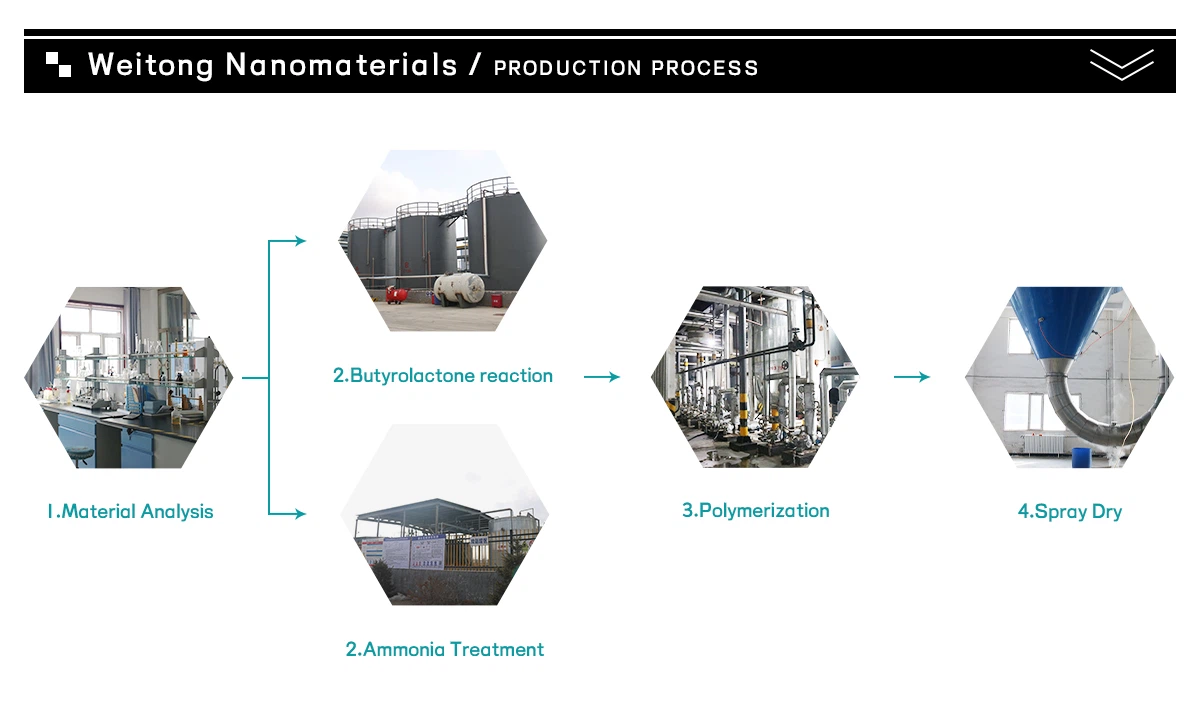
Industrial synthesis of 2-Pyrrolidone has been optimized for efficiency and scalability. Common
production methods include
Succinic Anhydride Method
Process: Succinic anhydride reacts with ammonia to form succinimide, which undergoes hydrolysis and cyclization to produce 2-Pyrrolidone.
Advantages: Simple and cost-effective, although wastewater treatment may be required.
Acetonitrile and Ketene Method
Process: Acetonitrile and ketene undergo addition and cyclization reactions under catalytic conditions.
Advantages: High selectivity and mild reaction conditions, though ketene handling requires care.
Biological Fermentation
Process: Employs microbial metabolism to convert substrates like succinic acid into 2-Pyrrolidone.
Advantages: Eco-friendly and sustainable, with reduced byproducts, though still in early stages of commercialization.
Specification:

Hot Tags: alpha pyrrolidone 616-45-5, China alpha pyrrolidone 616-45-5 manufacturers, suppliers, factory, Crospovidone Sds, Polytetrahydrofuran Structure, Povidone Iodine Betadine Chemicals, Povidone Powder Chemicals, N Vinylpyrrolidone Polymerization, BLO
You Might Also Like


Send Inquiry